- A
Vidi stvarno, Agata Kristi :)

Izvini, ja to stvarno nisam video.

Što je najgore, mislim da je to rekla Agata Kristi. :D
- A
Ja ovo vidim već koznakoji put...
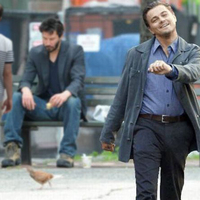
bravo drmr +

Možeš se posrati uvek, i bez ptičje pomoći...
 B C Č Ć D DŽ Đ E F G H I J K L LJ M N NJ O P R S Š T U V Z Ž X Y W Q 0 1 2 3 4 5 6 7 8 9 ?
A · Pusti mašti na volju · Diznilend · Itd. · Alapača · Nije sudija video · Duvanje u hranu. · Pumpa mi čuka · Pa ja sam za njega izmislio fudbal. · Grand
LogoOdjava
Profil
Naslovna
Definicije
Posteri
Komentari
Forum
Čet
Autori
Ktitori
KontaktPoslednji komentari na definicije
« prethodna
1
2
3
4
5
100
sledeća »Thumb_the-beatles-02-1-1
cornelije na definiciju 'Pusti mašti na volju'huhuhu +
pre minut
Thumb_the-beatles-02-1-1
cornelije na definiciju 'Nije sudija video'huhuhu + batori
pre 2 minuta
Thumb_capture
[] na definiciju 'Travel kanal'Na radijus vektoe nemamo cinemaniju , samo tv 1000!
pre 2 minuta
Thumb_medium_default
Thomdril Merrilin na definiciju 'Udri brigu na veselje'Ahahahahah!
pre 3 minuta
Thumb_dark_man
Manana na definiciju '倫敦'出自維基百科,自由嘅百科全書
倫敦
London
別名:霧都
國家 英國
成立嘅日期 都有成2,000幾年嘅歷史,
1801年成為世界最大都市
現任市長 Boris Johnson
面積 1,580平方公里
人口
-總人口(2003年3月)
-人口密度
740萬(大倫敦地區)
4680/平方公里
位置
-經度
-緯度
0°05」00』W
51°30」00』N
氣溫
-全年嘅最高
-全年嘅平均
-全年嘅最低
25 °C(7月)
°C
-2 °C(1月)
倫敦位置圖倫敦(London)係英國嘅首都,所以亦叫英京。同時亦係英格蘭嘅首府、歐盟人口最多嘅城市。自18世紀以來,倫敦一直都係世界上最重要嘅政治、經濟、文化、藝術同埋娛樂中心之一。係2005年,倫敦嘅人口有差唔多750萬,大城市區嘅人口超過1200萬人。倫敦係一個非常多元化嘅大都市,居民來自世界各地,具有多元嘅種族、宗教同文化,喺城市之中所講嘅語言超過300種。同時,倫敦更係世界聞名嘅旅遊勝地,擁有數量眾多嘅名勝景點與博物館等。
地理 編輯泰晤士河穿過倫敦,而且將城市分開做南同北。自從羅馬人喺嗰度定居之後,河上面逐漸起咗一條條嘅橋,而其中最著名嘅就係倫敦橋。
人口 編輯倫敦係歐洲繼莫斯科同巴黎之後嘅第三大都市。據2001年嘅人口普查,倫敦市區同佢嘅自治市(鎮)(約610平方英里)有7,172,036 人口。其中大概有71%係白人,10%係印度、孟加拉或巴基斯坦後裔,5%係非洲黑人後裔,5%係加勒比海黑人後裔,3%混血人種,重有差唔多1%係華人。58.2%嘅人口信奉基督教,15.8%嘅人口冇宗教信仰。大概有21.8%嘅倫敦居民喺歐盟以外嘅地區出世。
生活喺倫敦都市圈(6,267平方英里)入面嘅大約有13,945,000人口,比起蘇格蘭、威爾士同北愛爾蘭嘅人口總和重要多。倫敦都市圈係歐洲最大嘅都市圈,亦係世界上最大嘅20個都市圈之一。
pre 13 minuta
Manana
12 komentaraKomentari
Thumb_gzwl2kqr6z-k_b3fpgtcerpxihit2ty6
Zna Murinjo面積 1,580平方公里
人口
-總人口(2003年3月)
-人口密度 ??pre 12 minuta
Thumb_capture
[]Eto sad svi kinezi na vukajliji znaje gde je London!
pre 12 minuta
Thumb_the-beatles-02-1-1
cornelijeajd plus
pre 11 minuta
Thumb_midnight-rose
Bruce去阴茎
pre 10 minuta
Thumb_capture
[]汉语/漢語
pre 10 minuta
Thumb_konstantin_bodin
Царلندن
من ويكيبيديا، الموسوعة الحرة الكريمة
لندن
لندن
الاسم المستعار : الضباب
البلد المملكة المتحدة
تاريخ تأسيسها هي سخية سنة 2000 السخي من التاريخ ،
1801 لتصبح أكبر مدينة في العالم
العمدة الحالي بوريس جونسون
مساحة 1580 كيلومترا مربعا
عدد السكان
-- مجموع عدد السكان (مارس 2003)
-- الكثافة السكانية
7400000 (لندن الكبرى)
4680 / كم
موقع
-- خط الطول
-- خط العرض
0 درجة 05 "00" W
51 ° 30 "00" N
درجة حرارة الهواء
-- أعلى السنوية السخية
-- المتوسط السنوي السخي
-- أدنى السنوية السخية
25 درجة مئوية (7 أشهر)
درجة مئوية
-2 درجة مئوية (1 شهر)
لندن خريطة الموقعpre 6 minuta
Thumb_capture
[]Web
Images
Videos
Maps
News
Shopping
Gmail
moreGoogle Translate
From:
To:
Chinese language From Wikipedia, the free encyclopedia Unless otherwise specified, Chinese texts in this article are written in (Simplified Chinese/Traditional Chinese; Pinyin) format. In cases where Simplified and Traditional Chinese scripts are identical, the Chinese term is written once. This article contains Chinese text. Without proper rendering support, you may see question marks, boxes, or other symbols instead of Chinese characters. Chinese 汉语/漢語, 华语/華語 or 中文 Hànyǔ (Chinese) written in Hanzi Hanyu.png Spoken in People's Republic of China (PRC, commonly known as China), Republic of China (ROC, commonly known as Taiwan), Singapore, Malaysia, the United States, the Philippines, Australia, Indonesia, Mauritius, Peru, and other regions with Chinese communities Region (majorities): Mainland China, Hong Kong, Macau, Taiwan, Singapore (minorities): Southeast Asia, and other regions with Chinese communities Ethnicity Han Chinese and Hui people Total speakers approx 1.3 billion Language family Sino-Tibetan Sinitic Chinese Standard forms Mandarin Dialects Mandarin Jin Huizhou Wu Hunanese Jiangxinese Hakka Yue (including Cantonese-Taishanese) Pinghua Shaojiang Northern Min Eastern Min (including Fuchow) Central Min Pu Xian Southern Min (including Amoy, Taiwanese) Teochew (including Swatow, Chaozhou, Jieyang, parts of Shanwei/Meizhou) Writing system Chinese characters, zhuyin fuhao, pinyin, Xiao'erjing Official status Official language in United Nations People's Republic of China Hong Kong Macau Republic of China (Taiwan) Singapore (official, but not national language) Recognised minority language in Mauritius United States (minority and auxiliary) Regulated by In the PRC: National Language Regulating Committee1 In the ROC: National Languages Committee In Singapore: Promote Mandarin Council/Speak Mandarin Campaign2 Language codes ISO 639-1 zh ISO 639-2 chi (B) zho (T) ISO 639-3 zho – Macrolanguage individual codes: cdo – Min Dong cjy – Jinyu cmn – Mandarin cpx – Pu Xian czh – Huizhou czo – Min Zhong gan – Gan hak – Hakka hsn – Xiang mnp – Min Bei nan – Min Nan wuu – Wu yue – Yue och – Old Chinese ltc – Late Middle Chinese lzh – Literary Chinese Linguasphere 79-AAA New-Map-Sinophone World.PNG Map of the Sinophone world. Information: Countries identified Chinese as a primary, administrative, or native language Countries with more than 5,000,000 Chinese speakers w/ or w/o recognition Countries with more than 1,000,000 Chinese speakers w/ or w/o recognition Countries with more than 500,000 Chinese speakers w/ or w/o recognition Countries with more than 100,000 Chinese speakers w/ or w/o recognition Major Chinese speaking settlements Note: This page may contain IPA phonetic symbols in Unicode. Chinese language (Spoken) Traditional Chinese 漢語 Simplified Chinese 汉语 showTranscriptions alternative Chinese name Traditional Chinese 華語 Simplified Chinese 华语 showTranscriptions Chinese language (Written) Chinese 中文 Literal meaning Chinese text showTranscriptions The varieties of spoken Chinese citation needed in Eastern China and Taiwan Chinese, the Chinese languages, or the Sinitic languages (汉语/漢語 Hànyǔ; 华语/華語 Huáyǔ; 中文 Zhōngwén) is a language family consisting of languages which are mostly mutually unintelligible to varying degrees.3 Originally the indigenous languages spoken by the Han Chinese in China, it forms one of the branches of Sino-Tibetan family of languages. About one-fifth of the world’s population, or over one billion people, speaks some variety of Chinese as their native language. Internal divisions of Chinese are usually perceived by their native speakers as dialects of a single Chinese language, rather than separate languages, although this identification is considered inappropriate by some linguists and Sinologists.4 Chinese is distinguished by its high level of internal diversity, although all varieties of Chinese are tonal and analytic. There are between 7 and 13 main regional groups of Chinese (depending on classification scheme), of which the most spoken, by far, is Mandarin (about 850 million), followed by Wu (90 million), Cantonese (Yue) (70 million) and Min (50 million). Most of these groups are mutually unintelligible, although some, like Xiang and the Southwest Mandarin dialects, may share common terms and some degree of intelligibility. Standard Chinese (Putonghua / Guoyu / Huayu) is a standardized form of spoken Chinese based on the Beijing dialect of Mandarin Chinese, referred to as 官话/官話 Guānhuà or 北方话/北方話 Běifānghuà in Chinese. Standard Chinese is the official language of the People's Republic of China (PRC) and the Republic of China (ROC, also known as Taiwan), as well as one of four official languages of Singapore. It is one of the six official languages of the United Nations. Of the other varieties of Chinese, Cantonese is influential in Guangdong Province and Cantonese-speaking overseas communities, and remains one of the official languages of Hong Kong (together with English) and of Macau (together with Portuguese). Min Nan, part of the Min language group, is widely spoken in southern Fujian, in neighbouring Taiwan (where it is known as Taiwanese or Hoklo) and in Southeast Asia (known as Hokkien in Singapore and Malaysia). There are also sizeable Hakka and Shanghainese diaspora, for example in Taiwan, where most Hakka communities maintain diglossia by being conversant in Taiwanese and Standard Chinese. Contents hide 1 Varieties of Chinese 1.1 Standard Chinese and diglossia 1.2 Linguistics 1.3 Language and nationality 2 Writing 2.1 Chinese characters 3 History 4 Influences 5 Phonology 6 Phonetic transcriptions 6.1 Romanization 6.2 Other phonetic transcriptions 7 Grammar and morphology 7.1 Tones and homophones 8 Vocabulary 9 Loanwords 9.1 Modern borrowings and loanwords 10 Education 11 See also 12 References 13 Footnotes 14 Further reading 15 External links edit Varieties of Chinese Main article: Varieties of Chinese See also: List of Chinese dialects A map below depicts the linguistic subdivisions ("languages" or "dialect groups") within China itself. The traditionally recognized seven main groups, in order of population size arecitation needed: Name↓ Abbreviation↓ Pinyin↓ Local Romanization↓ Simp.↓ Trad.↓ Total Speakers↓ Mandarin Notes: includes Standard Chinese Guan; 官 Guānhuà Pinyin: Guānhuà 官话 官話 c. 1.365 billion Běifānghuà Pinyin: Běifānghuà 北方话 北方話 Wu Notes: includes Shanghainese Wu; 吴/吳 Wúyǔ Long-short: Ng nyiu or Ghu nyiu 吴语 吳語 c. 90 million Yue Notes: includes Cantonese & Taishanese Yue; 粤/粵 Yuèyǔ Jyutping: Jyut6 jyu5; Yale: Yuht yúh 粤语 粵語 c. 70 million Min Notes: includes Hokkien, Taiwanese & Teochew Min; 闽/閩 Mǐnyǔ POJ: Bân gú; BUC: Mìng ngṳ̄ 闽语 閩語 c. 50 million Xiang Xiang; 湘 Xiāngyǔ Romanization: Shiāen'ỳ 湘语 湘語 c. 35 million Hakka Kejia; 客家 Kèjiāhuà Hakka Pinyin: Hak-kâ-fa or Hak-kâ-va 客家话 客家話 c. 35 million Kèhuà Hakka Pinyin: Hak-fa or Hak-va 客话 客話 Gan Gan; 贛 Gànyǔ Romanization: Gon ua 赣语 贛語 c. 31 million Disputed classifications by some Chinese linguistsby whom?: Name↓ Abbreviation↓ Pinyin↓ Local Romanization↓ Simp.↓ Trad.↓ Total Speakers↓ Jin Notes: from Mandarin Jin; 晋/晉 Jìnyǔ None 晋语 晉語 45 million Huizhou Notes: from Wu Hui; 徽 Huīzhōuhuà None 徽州话 徽州話 ~3.2 million Pinghua Notes: from Yue Ping; 平 Guǎngxī Pínghuà None 广西平话 廣西平話 ~5 million There are groups that are not yet classified, such as: Danzhou dialect (儋州话/儋州話), spoken in Danzhou, on Hainan Island; Xianghua (乡话/鄉話), not to be confused with Xiang (湘), spoken in western Hunan; and Shaozhou Tuhua (韶州土话/韶州土話), spoken in northern Guangdong. The Dungan language, spoken in Central Asia, is very closely related to Mandarin. However, it is politically not generally considered "Chinese" since it is written in Cyrillic and spoken by Dungan people outside China who are not considered ethnic Chinese. In general, the above language-dialect groups do not have sharp boundaries, though Mandarin is the predominant Sinitic language in the North and the Southwest, and the rest are mostly spoken in Central or Southeastern China. Frequently, as in the case of the Guangdong province, native speakers of major variants overlapped. As with many areas that were linguistically diverse for a long time, it is not always clear how the speeches of various parts of China should be classified. The Ethnologue lists a total of 14, but the number varies between seven and 17 depending on the classification scheme followed. For instance, the Min variety is often divided into Northern Min (Minbei, Fuchow) and Southern Min (Minnan, Amoy-Swatow); linguists have not determined whether their mutual intelligibility is small enough to sort them as separate languages. Generally, mountainous South China displays more linguistic diversity than the flat North China. In parts of South China, a major city's dialect may only be marginally intelligible to close neighbours. For instance, Wuzhou is about 120 miles upstream from Guangzhou, but its dialect is more like that of Guangzhou than is that of Taishan, 60 miles southwest of Guangzhou and separated by several rivers from it (Ramsey, 1987). edit Standard Chinese and diglossia Main article: Standard Chinese Putonghua / Guoyu, often called "Mandarin", is the official standard language used by the People's Republic of China, the Republic of China (Taiwan), and Singapore (where it is called "Huayu"). It is based on the Beijing dialect, which is the dialect of Mandarin as spoken in Beijing. The government intends for speakers of all Chinese speech varieties to use it as a common language of communication. Therefore it is used in government agencies, in the media, and as a language of instruction in schools. In mainland China and Taiwan, diglossia has been a common feature: it is common for a Chinese to be able to speak two or even three varieties of the Sinitic languages (or “dialects”) together with Standard Chinese. For example, in addition to putonghua a resident of Shanghai might speak Shanghainese and, if they did not grow up there, his or her local dialect as well. A native of Guangzhou may speak Cantonese and putonghua, a resident of Taiwan, both Taiwanese and putonghua/guoyu. A person living in Taiwan may commonly mix pronunciations, phrases, and words from Mandarin and Taiwanese, and this mixture is considered normal under many circumstances. In Hong Kong, Mandarin is beginning to take its place beside English and Cantonese, the other official languages.citation needed edit Linguistics Linguists often view Chinese as a language family, though owing to China's socio-political and cultural situation, and the fact that all spoken varieties use one common written system, it is customary to refer to these generally mutually unintelligible variants as "the Chinese language". The diversity of Sinitic variants is comparable to the Romance languages. From a purely descriptive point of view, "languages" and "dialects" are simply arbitrary groups of similar idiolects, and the distinction is irrelevant to linguists who are only concerned with describing regional speeches technically. However, the idea of a single language has major overtones in politics and cultural self-identity, and explains the amount of emotion over this issue. Most Chinese and Chinese linguists refer to Chinese as a single language and its subdivisions dialects, while others call Chinese a language family. Chinese itself has a term for its unified writing system, Zhongwen (中文), while the closest equivalent used to describe its spoken variants would be Hanyu (汉语/漢語, "spoken languages of the Han Chinese")—this term could be translated to either "language" or "languages" since Chinese possesses no grammatical numbers. For centuries in China, owing to the widespread use of a written standard in Classical Chinese, there is much less necessity to maintain a uniform speech-and-writing continuum, as indicated by the employment of two separate character morphemes 语/語 yu and 文 wen. The character morphemes used in written Chinese are logographs that convey semantics graphically rather than phonologically, although some logographs are compounds conveying both semantic meaning (the "radical") and phonological information. Ethnic Chinese often consider these spoken variations as one single language for reasons of nationality and as they inherit one common cultural and linguistic heritage in Classical Chinese. Han native speakers of Wu, Min, Hakka, and Cantonese, for instance, may consider their own linguistic varieties as separate spoken languages, but the Han Chinese as one—albeit internally very diverse—ethnicity. To Chinese nationalists, the idea of Chinese as a language family may suggest that the Chinese identity is much more fragmented and disunified than it actually is and as such is often looked upon as culturally and politically provocative. Additionally, in Taiwan, it is closely associated with Taiwanese independence, where some supporters of Taiwanese independence promote the local Taiwanese Minnan-based spoken language. Within the People's Republic of China and Singapore, it is common for the government to refer to all divisions of the Sinitic language(s) beside Standard Chinese as fangyan (“regional tongues”, often translated as "dialects"). Modern-day Chinese speakers of all kinds communicate using one formal standard written language, although this modern written standard is modeled after Mandarin, generally the modern Beijing dialect. edit Language and nationality The term sinophone, coined in analogy to anglophone and francophone, refers to those who speak the Chinese language natively, or prefer it as a medium of communication. The term is derived from Sinae, the Latin word for ancient China. edit Writing Main article: Written Chinese The relationship between the Chinese spoken and written language is rather complex. Its spoken varieties evolved at different rates, while written Chinese itself has changed much less. Classical Chinese literature began in the Spring and Autumn period, although written records have been discovered as far back as the 14th to 11th centuries BCE Shang dynasty oracle bones using the oracle bone scripts. The Chinese orthography centers on Chinese characters, hanzi, which are written within imaginary rectangular blocks, traditionally arranged in vertical columns, read from top to bottom down a column, and right to left across columns. Chinese characters are morphemes independent of phonetic change. Thus the number "one", yi in Mandarin, jat in Cantonese and chi̍t in Hokkien (form of Min), all share an identical character ("一"). Vocabularies from different major Chinese variants have diverged, and colloquial non-standard written Chinese often makes use of unique "dialectal characters", such as 冇 and 係 for Cantonese and Hakka, which are considered archaic or unused in standard written Chinese. Written colloquial Cantonese has become quite popular in online chat rooms and instant messaging amongst Hong-Kongers and Cantonese-speakers elsewhere. Use of it is considered highly informal, and does not extend to many formal occasions. In Hunan, women in certain areas write their local language in Nü Shu, a syllabary derived from Chinese characters. The Dungan language, considered by many a dialect of Mandarin, is nowadays written in Cyrillic, and was previously written in the Arabic alphabet. The Dungan people live outside China. edit Chinese characters Main article: Chinese character Chinese characters evolved over time from earlier forms of hieroglyphs. The idea that all Chinese characters are either pictographs or ideographs is an erroneous one: most characters contain phonetic parts, and are composites of phonetic components and semantic radicals. Only the simplest characters, such as ren 人 (human), ri 日 (sun), shan 山 (mountain; hill), shui 水 (water), may be wholly pictorial in origin. In 100 CE, the famed scholar Xǔ Shèn in the Hàn Dynasty classified characters into six categories, namely pictographs, simple ideographs, compound ideographs, phonetic loans, phonetic compounds and derivative characters. Of these, only 4% were categorized as pictographs, and 80–90% as phonetic complexes consisting of a semantic element that indicates meaning, and a phonetic element that indicates the pronunciation. There are about 214 radicals recognized in the Kangxi Dictionary. Modern characters are styled after the regular script (楷书/楷書 kǎishū) (see styles, below). Various other written styles are also used in East Asian calligraphy, including seal script (篆书/篆書 zhuànshū), cursive script (草书/草書 cǎoshū) and clerical script (隶书/隸書 lìshū). Calligraphy artists can write in traditional and simplified characters, but tend to use traditional characters for traditional art. "Preface to the Poems Composed at the Orchid Pavilion" by Wang Xizhi, written in semi-cursive style There are currently two systems for Chinese characters. The traditional system, still used in Hong Kong, Taiwan, Macau and Chinese speaking communities (except Singapore and Malaysia) outside mainland China, takes its form from standardized character forms dating back to the late Han dynasty. The Simplified Chinese character system, developed by the People's Republic of China in 1954 to promote mass literacy, simplifies most complex traditional glyphs to fewer strokes, many to common caoshu shorthand variants. Singapore, which has a large Chinese community, is the first—and at present the only—foreign nation to officially adopt simplified characters, although it has also become the de facto standard for younger ethnic Chinese in Malaysia. The Internet provides the platform to practice reading the alternative system, be it traditional or simplified. A well-educated Chinese reader today recognizes approximately 5,000–7,000 characters; approximately 3,000 characters are required to read a Mainland newspaper. The PRC government defines literacy amongst workers as a knowledge of 2,000 characters, though this would be only functional literacy. A large unabridged dictionary, like the Kangxi Dictionary, contains over 40,000 characters, including obscure, variant, rare, and archaic characters; fewer than a quarter of these characters are now commonly used. edit History History of China History of China ANCIENT 3 Sovereigns and 5 Emperors Xia Dynasty 2100–1600 BCE Shang Dynasty 1600–1046 BCE Zhou Dynasty 1045–256 BCE Western Zhou Eastern Zhou Spring and Autumn Period Warring States Period IMPERIAL Qin Dynasty 221 BCE–206 BCE Han Dynasty 206 BCE–220 CE Western Han Xin Dynasty Eastern Han Three Kingdoms 220–280 Wei, Shu & Wu Jin Dynasty 265–420 Western Jin 16 Kingdoms 304–439 Eastern Jin Southern & Northern Dynasties 420–589 Sui Dynasty 581–618 Tang Dynasty 618–907 ( Second Zhou 690–705 ) 5 Dynasties & 10 Kingdoms 907–960 Liao Dynasty 907–1125 Song Dynasty 960–1279 Northern Song W. Xia Southern Song Jin Yuan Dynasty 1271–1368 Ming Dynasty 1368–1644 Qing Dynasty 1644–1911 MODERN Republic of China 1912–1949 People's Republic of China 1949–present Republic of China (Taiwan) 1945–present Related articles show This box: view · talk · edit Main article: History of the Chinese language Most linguists classify all varieties of modern spoken Chinese as part of the Sino-Tibetan language family and believe that there was an original language, termed Proto-Sino-Tibetan, from which the Sinitic and Tibeto-Burman languages descended. The relation between Chinese and other Sino-Tibetan languages is an area of active research, as is the attempt to reconstruct Proto-Sino-Tibetan. The main difficulty in this effort is that, while there is enough documentation to allow one to reconstruct the ancient Chinese sounds, there is no written documentation that records the division between Proto-Sino-Tibetan and ancient Chinese. In addition, many of the older languages that would allow us to reconstruct Proto-Sino-Tibetan are very poorly understood and many of the techniques developed for analysis of the descent of the (fusional) Indo-European languages from PIE do not apply to Chinese, an isolating language because of "morphological paucity" especially after Old Chinese.5 Categorization of the development of Chinese is a subject of scholarly debate. One of the first systems was devised by the Swedish linguist Bernhard Karlgren in the early 1900s; most present systems rely heavily on Karlgren's insights and methods. Old Chinese, sometimes known as "Archaic Chinese", was the language common during the early and middle Zhou Dynasty (1122 BCE–256 BCE), texts of which include inscriptions on bronze artifacts, the poetry of the Shījīng, the history of the Shūjīng, and portions of the Yìjīng (I Ching). The phonetic elements found in the majority of Chinese characters provide hints to their Old Chinese pronunciations. The pronunciation of the borrowed Chinese characters in Japanese, Vietnamese and Korean also provide valuable insights. Old Chinese was not wholly uninflected. It possessed a rich sound system in which aspiration or rough breathing differentiated the consonants, but probably was still without tones. Work on reconstructing Old Chinese started with Qīng dynasty philologists. Some early Indo-European loan-words in Chinese have been proposed, notably 蜜 mì "honey", 獅 shī "lion," and perhaps also 馬 mǎ "horse", 犬 quǎn "dog", and 鵝 é "goose". The source says the reconstructions of old Chinese are tentative, and not definitive so no conclusions should be drawn. The reconstruction of Old Chinese can not be perfect so this hypothesis may be called into question.6 The source also notes that southern dialects of Chinese have more monosyllabic words than the Mandarin Chinese dialects. Middle Chinese was the language used during Southern and Northern Dynasties and the Suí, Táng, and Sòng dynasties (6th through 10th centuries CE). It can be divided into an early period, reflected by the "Qiēyùn" rime book (601 CE), and a late period in the 10th century, reflected by the "Guǎngyùn" rime book. Linguists are more confident of having reconstructed how Middle Chinese sounded. The evidence for the pronunciation of Middle Chinese comes from several sources: modern dialect variations, rhyming dictionaries, foreign transliterations, "rhyming tables" constructed by ancient Chinese philologists to summarize the phonetic system, and Chinese phonetic translations of foreign words. However, all reconstructions are tentative; some scholars have argued that trying to reconstruct, say, modern Cantonese from modern Cantopop rhymes would give a fairly inaccurate picture of the present-day spoken language. The development of the spoken Chinese languages from early historical times to the present has been complex. Most Chinese people, in Sìchuān and in a broad arc from the north-east (Manchuria) to the south-west (Yunnan), use various Mandarin dialects as their home language. The prevalence of Mandarin throughout northern China is largely due to north China's plains. By contrast, the mountains and rivers of middle and southern China promoted linguistic diversity. Until the mid-20th century, most southern Chinese only spoke their native local variety of Chinese. As Nanjing was the capital during the early Ming Dynasty, Nanjing Mandarin became dominant at least until the later years of the Qing Dynasty. Since the 17th century, the Qing Dynasty had set up orthoepy academies (正音书院/正音書院; Zhèngyīn Shūyuàn) to make pronunciation conform to the standard of the capital Beijing. For the general population, however, this had limited effect. The non-Mandarin speakers in southern China also continued to use their various languages for every aspect of life. The Beijing Mandarin court standard was used solely by officials and civil servants and was thus fairly limited. This situation did not change until the mid-20th century with the creation (in both the PRC and the ROC, but not in Hong Kong) of a compulsory educational system committed to teaching Mandarin. As a result, Mandarin is now spoken by virtually all young and middle-aged citizens of mainland China and on Taiwan. Cantonese, not Mandarin, was used in Hong Kong during the time of its British colonial period (owing to its large Cantonese native and migrant populace) and remains today its official language of education, formal speech, and daily life, but Mandarin is becoming increasingly influential after the 1997 handover. Classical Chinese was once the lingua franca in neighbouring East Asian countries such as Japan, Korea and Vietnam for centuries, before the rise of European influences in the 19th century.7 edit Influences Throughout history Chinese culture and politics has had a great influence on unrelated languages such as Korean and Japanese. Korean and Japanese both have writing systems employing Chinese characters (hanzi), which are called Hanja and Kanji, respectively. The Vietnamese term for Chinese writing is Hán tự. It was the only available method for writing Vietnamese until the 14th century, used almost exclusively by Chinese-educated Vietnamese élites. From the 14th to the late 19th century, Vietnamese was written with Chữ nôm, a modified Chinese script incorporating sounds and syllables for native Vietnamese speakers. Chữ nôm was completely replaced by a modified Latin script created by the Jesuit missionary priest Alexander de Rhodes, which incorporates a system of diacritical marks to indicate tones, as well as modified consonants. Approximately 60% of the modern Vietnamese lexicon is recognized as Hán-Việt (Sino-Vietnamese), the majority of which was borrowed from Middle Chinese. In South Korea, the Hangul alphabet is generally used, but Hanja is used as a sort of boldface. In North Korea, Hanja has been discontinued. Since the modernization of Japan in the late 19th century, there has been debate about abandoning the use of Chinese characters, but the practical benefits of a radically new script have so far not been considered sufficient. Derived Chinese characters or Sawndip are used to write Zhuang songs, even though Zhuang is not a Chinese dialect. Since the 1950s, the Zhuang language has been written in a modified Latin alphabet.8 Languages within the influence of Chinese culture also have a very large number of loanwords from Chinese. Fifty percent or more of Korean vocabulary is of Chinese origin,9 likewise for a significant percentage of Japanese10 and Vietnamese vocabulary. Loan words from Chinese also exist in European languages such as English. Examples of such words are "tea" from the Minnan pronunciation of 茶 (POJ: tê), "ketchup" from the Cantonese pronunciation of 茄汁 (Jyutping: ke2 zap1) and "kumquat" from the Cantonese pronunciation of 金橘 (Jyutping: gam1 gwat1). edit Phonology This article contains IPA phonetic symbols. Without proper rendering support, you may see question marks, boxes, or other symbols instead of Unicode characters. Main article: Chinese spoken language The phonological structure of each syllable consists of a nucleus consisting of a vowel (which can be a monophthong, diphthong, or even a triphthong in certain varieties) with an optional onset or coda consonant as well as a tone. There are some instances where a vowel is not used as a nucleus. An example of this is in Cantonese, where the nasal sonorant consonants /m/ and /ŋ/ can stand alone as their own syllable. Across all the spoken varieties, most syllables tend to be open syllables, meaning they have no coda, but syllables that do have codas are restricted to /m/, /n/, /ŋ/, /p/, /t/, /k/, or /ʔ/. Some varieties allow most of these codas, whereas others, such as Mandarin, are limited to only two, namely /n/ and /ŋ/. Consonant clusters do not generally occur in either the onset or coda. The onset may be an affricate or a consonant followed by a semivowel, but these are not generally considered consonant clusters. The number of sounds in the different spoken dialects varies, but in general there has been a tendency to a reduction in sounds from Middle Chinese. The Mandarin dialects in particular have experienced a dramatic decrease in sounds and so have far more multisyllabic words than most other spoken varieties. The total number of syllables in some varieties is therefore only about a thousand, including tonal variation, which is only about an eighth as many as English.11 All varieties of spoken Chinese use tones. A few dialects of north China may have as few as three tones, while some dialects in south China have up to 6 or 10 tones, depending on how one counts. One exception from this is Shanghainese which has reduced the set of tones to a two-toned pitch accent system much like modern Japanese. A very common example used to illustrate the use of tones in Chinese are four tones of Standard Chinese applied to the syllable "ma." The tones correspond to these five characters: This article contains Ruby annotation. Without proper rendering support, you may see transcriptions in parentheses after the character instead of ruby glosses. 妈/媽(mā) "mother"—high level 麻(má) "linen" or "numb"—high rising 马/馬(mǎ) "horse"—low falling-rising 骂/罵(mà) "scold"—high falling 吗/嗎(ma) "question particle"—neutral Listen to the tones This is a recording of the four main tones. Fifth, or neutral, tone is not included. Problems listening to this file? See media help. edit Phonetic transcriptions The Chinese had no uniform phonetic transcription system until the mid-20th century, although enunciation patterns were recorded in early rime books and dictionaries. Early Indian translators, working in Sanskrit and Pali, were the first to attempt to describe the sounds and enunciation patterns of Chinese in a foreign language. After the 15th century, the efforts of Jesuits and Western court missionaries resulted in some rudimentary Latin transcription systems, based on the Nanjing Mandarin dialect. edit Romanization See also: Chinese language romanisation in Singapore and Romanization of Mandarin Chinese Romanization is the process of transcribing a language in the Latin alphabet. There are many systems of romanization for the Chinese languages due to the lack of a native phonetic transcription until modern times. Chinese is first known to have been written in Latin characters by Western Christian missionaries in the 16th century. Today the most common romanization standard for Standard Chinese is Hanyu Pinyin, often known simply as pinyin, introduced in 1956 by the People's Republic of China, and later adopted by Singapore and Taiwan. Pinyin is almost universally employed now for teaching standard spoken Chinese in schools and universities across America, Australia and Europe. Chinese parents also use Pinyin to teach their children the sounds and tones of new words. In school books that teach Chinese, the Pinyin romanization is often shown below a picture of the thing the word represents, with the Chinese character alongside. The second-most common romanization system, the Wade-Giles, was invented by Thomas Wade in 1859 and modified by Herbert Giles in 1892. As this system approximates the phonology of Mandarin Chinese into English consonants and vowels, i.e. it is an Anglicization, it may be particularly helpful for beginner Chinese speakers of an English-speaking background. Wade-Giles was found in academic use in the United States, particularly before the 1980s, and until recentlywhen? was widely used in Taiwan. When used within European texts, the tone transcriptions in both pinyin and Wade-Giles are often left out for simplicity; Wade-Giles' extensive use of apostrophes is also usually omitted. Thus, most Western readers will be much more familiar with Beijing than they will be with Běijīng (pinyin), and with Taipei than T'ai²-pei³ (Wade-Giles). Here are a few examples of Hanyu Pinyin and Wade-Giles, for comparison: Mandarin Romanization Comparison Characters Wade-Giles Hanyu Pinyin Notes 中国/中國 Chung¹-kuo² Zhōngguó "China" 北京 Pei³-ching¹ Běijīng Capital of the People's Republic of China 台北 T'ai²-pei³ Táiběi Capital of the Republic of China (Taiwan) 毛泽东/毛澤東 Mao² Tse²-tung¹ Máo Zédōng Former Communist Chinese leader 蒋介石/蔣介石 Chiang³ Chieh⁴-shih² Jiǎng Jièshí Former Nationalist Chinese leader (better known to English speakers as Chiang Kai-shek, with Cantonese pronunciation) 孔子 K'ung³ Tsu³ Kǒng Zǐ "Confucius" Other systems of romanization for Chinese include Gwoyeu Romatzyh, the French EFEO, the Yale (invented during WWII for U.S. troops), as well as separate systems for Cantonese, Minnan, Hakka, and other Chinese languages or dialects. edit Other phonetic transcriptions Chinese languages have been phonetically transcribed into many other writing systems over the centuries. The 'Phags-pa script, for example, has been very helpful in reconstructing the pronunciations of pre-modern forms of Chinese. Zhuyin (also called bopomofo), a semi-syllabary is still widely used in Taiwan's elementary schools to aid standard pronunciation. Although bopomofo characters are reminiscent of katakana script, there is no source to substantiate the claim that Katakana was the basis for the zhuyin system. A comparison table of zhuyin to pinyin exists in the zhuyin article. Syllables based on pinyin and zhuyin can also be compared by looking at the following articles: Pinyin table Zhuyin table There are also at least two systems of cyrillization for Chinese. The most widespread is the Palladius system. edit Grammar and morphology Main article: Chinese grammar See also: Chinese classifiers Chinese is often described as a "monosyllabic" language. However, this is only partially correct. It is largely accurate when describing Classical Chinese and Middle Chinese; in Classical Chinese, for example, perhaps 90% of words correspond to a single syllable and a single character. In the modern varieties, it is still usually the case that a morpheme (unit of meaning) is a single syllable; contrast English, with plenty of multi-syllable morphemes, both bound and free, such as "seven", "elephant", "para-" and "-able". Some of the conservative southern varieties of modern Chinese still have largely monosyllabic words, especially among the more basic vocabulary. In modern Mandarin, however, most nouns, adjectives and verbs are largely disyllabic. A significant cause of this is phonological attrition. Sound change over time has steadily reduced the number of possible syllables. In modern Mandarin, there are now only about 1,200 possible syllables, including tonal distinctions, compared with about 5,000 in Vietnamese (still largely monosyllabic) and over 8,000 in English.12 This phonological collapse has led to a corresponding increase in the number of homophones. As an example, the small Langenscheidt Pocket Chinese Dictionary13 lists 7 words pronounced shī , 6 pronounced shí, 4 pronounced shǐ, and 11 pronounced shì (each word pronounced /ʂɨ/, in tones 1 through 4, respectively). Each such word has a different meaning and is written with a different character, and thus in writing, all can be used without problem. In speaking, however, tremendous ambiguity would result if all of these words could be used, and in fact, the vast majority have been replaced with some other word. As an example, consider the six tone-2 words: 十 "ten"; 实 "real, actual"; 识 "know (a person), recognize"; 石 "stone"; 时 "time"; 食 "food". Only the first one, 十 "ten", normally appears as such when spoken; the rest are normally replaced with, respectively, 实际 shíjì (lit. "actual-connection"); 认识 rènshi (lit. "recognize-know"); 石头 shítou (lit. "stone-head"); 时间 shíjiān (lit. "time-interval"); 食物 shíwù (lit. "food-thing"). In each case, the homophone was disambiguated by adding another word, typically either a synonym or a generic word of some sort (for example, "head", "thing"), whose purpose is simply to indicate which of the possible meanings of the other, homophonic syllable should be selected. Note also that 十 实 识 石 时 食 were pronounced /dʑip/, /ʑit/, /ɕik/, /dʑjek/, /dʑī/, /ʑik/ respectively in Early Middle Chinese, according to William Baxter's transcription – each one different from all the others. Furthermore, when one of the above words forms part of a compound, the disambiguating syllable is dropped and the resulting word is still disyllabic. For example, 石 shí alone, not 石头 shítou, appears in compounds meaning "stone-", for example, 石膏 shígāo "plaster" (lit. "stone cream"), 石灰 shíhuī "lime" (lit. "stone dust"), 石窟 shíkū "grotto" (lit. "stone cave"), 石英 shíyīng "quartz" (lit. "stone flower"), 石油 shíyóu "petroleum" (lit. "stone oil"). Most modern varieties of Chinese have the tendency to form new words through disyllabic, trisyllabic and tetra-character compounds. In some cases, monosyllabic words have become disyllabic without compounding, as in 窟窿 kulong from 孔 kong; this is especially common in Jin. Chinese morphology is strictly bound to a set number of syllables with a fairly rigid construction which are the morphemes, the smallest blocks of the language. While many of these single-syllable morphemes (字, zì) can stand alone as individual words, they more often than not form multi-syllabic compounds, known as cí (词/詞), which more closely resembles the traditional Western notion of a word. A Chinese cí (“word”) can consist of more than one character-morpheme, usually two, but there can be three or more. For example: Yun 雲—“cloud” (traditional) Yun 云—“cloud” (simplified) Han-bao-bao/Hanbao 漢堡包/漢堡—“hamburger” (traditional) Han-bao-bao/Hanbao 汉堡包/汉堡—"hamburger" (simplified) Wo 我—“I, me” Ren 人—“people” Di-qiu 地球—“earth (globosity)” Shan-dian 閃電—“lightning” (traditional) Shan-dian 闪电—"lightning" (simplifed) Meng 夢—“dream” (traditional) Meng 梦—"dream" (simplified) All varieties of modern Chinese are analytic languages, in that they depend on syntax (word order and sentence structure) rather than morphology—i.e., changes in form of a word—to indicate the word's function in a sentence. In other words, Chinese has very few grammatical inflections—it possesses no tenses, no voices, no numbers (singular, plural; though there are plural markers, for example for personal pronouns), and only a few articles (i.e., equivalents to "the, a, an" in English). There is, however, a gender difference in the written language (他 as "he" and 她 as "she"), but it should be noted that this is a relatively new introduction to the Chinese language in the twentieth century, and both characters are pronounced in exactly the same way. They make heavy use of grammatical particles to indicate aspect and mood. In Mandarin Chinese, this involves the use of particles like le 了 (perfective), hai 还/還 (still), yijing 已经/已經 (already), and so on. Chinese features Subject-Verb-Object word order, and like many other languages in East Asia, makes frequent use of the topic-comment construction to form sentences. Chinese also has an extensive system of classifiers and measure words, another trait shared with neighbouring languages like Japanese and Korean. Other notable grammatical features common to all the spoken varieties of Chinese include the use of serial verb construction, pronoun dropping and the related subject dropping. Although the grammars of the spoken varieties share many traits, they do possess differences. edit Tones and homophones Official modern Mandarin has only 400 spoken monosyllables but over 10,000 written characters, so there are many homophones only distinguishable by the four tones. Even this is often not enough unless the context and exact phrase or cí is identified. The mono-syllable jī, first tone in Mandarin, corresponds to the following characters: 鸡/雞 chicken, 机/機 machine, 基 basic, 击/擊 (to) hit, 饥/饑 hunger, and 积/積 product. In speech, the glyphing of a monosyllable to its meaning must be determined by context or by relation to other morphemes (for example, "some" as in the opposite of "none"). Native speakers may state which words or phrases their names are found in, for convenience of writing: 名字叫嘉英,嘉陵江的嘉,英國的英 Míngzi jiào Jiāyīng, Jiālíng Jiāng de jiā, Yīngguó de yīng "My name is Jiāyīng, the Jia for Jialing River and the ying for the short form in Chinese of UK." Southern Chinese varieties like Cantonese and Hakka preserved more of the rimes of Middle Chinese and have more tones. The previous examples of jī, have more distinct pronunciations in Cantonese (romanized using jyutping): gai1, gei1, gei1, gik1, gei1, and zik1 respectively. For this reason, southern varieties tend to need to employ fewer multi-syllabic words. edit Vocabulary The entire Chinese character corpus since antiquity comprises well over 20,000 characters, of which only roughly 10,000 are now commonly in use. However Chinese characters should not be confused with Chinese words; since most Chinese words are made up of two or more different characters, there are many times more Chinese words than there are characters. Estimates of the total number of Chinese words and phrases vary greatly. The Hanyu Da Zidian, a compendium of Chinese characters, includes 54,678 head entries for characters, including bone oracle versions. The Zhonghua Zihai (1994) contains 85,568 head entries for character definitions, and is the largest reference work based purely on character and its literary variants. The CC-CEDICT project (2010) contains 97,404 contemporary entries including idioms, technology terms and names of political figures, businesses and products. The 2009 version of the Webster's Digital Chinese Dictionary (WDCD),14 based on CC-CEDICT, contains over 84,000 entries. The most comprehensive pure linguistic Chinese-language dictionary, the 12-volumed Hanyu Da Cidian, records more than 23,000 head Chinese characters and gives over 370,000 definitions. The 1999 revised Cihai, a multi-volume encyclopedic dictionary reference work, gives 122,836 vocabulary entry definitions under 19,485 Chinese characters, including proper names, phrases and common zoological, geographical, sociological, scientific and technical terms. The latest 2007 5th edition of Xiandai Hanyu Cidian 现代汉语词典/現代漢語詞典, an authoritative one-volume dictionary on modern standard Chinese language as used in mainland China, has 65,000 entries and defines 11,000 head characters. edit Loanwords See also: Translation of neologisms into Chinese and Transcription into Chinese characters Like any other language, Chinese has absorbed a sizable number of loanwords from other cultures. Most Chinese words are formed out of native Chinese morphemes, including words describing imported objects and ideas. However, direct phonetic borrowing of foreign words has gone on since ancient times. Words borrowed from along the Silk Road since Old Chinese include 葡萄 "grape", 石榴 "pomegranate" and 狮子/獅子 "lion". Some words were borrowed from Buddhist scriptures, including 佛 "Buddha" and 菩萨/菩薩 "bodhisattva." Other words came from nomadic peoples to the north, such as 胡同 "hutong". Words borrowed from the peoples along the Silk Road, such as 葡萄 "grape" (pútáo in Mandarin) generally have Persian etymologies. Buddhist terminology is generally derived from Sanskrit or Pāli, the liturgical languages of North India. Words borrowed from the nomadic tribes of the Gobi, Mongolian or northeast regions generally have Altaic etymologies, such as 琵琶 "pípa", the Chinese lute, or 酪 "cheese" or "yoghurt", but from exactly which source is not always clear. edit Modern borrowings and loanwords Modern neologisms are translated into Chinese primarily in three ways: free translation (calque, by meaning), phonetic translation (by sound) and a combination of the above two (partially transcriptive with a careful selection of meaning-encoding characters). Today, it is much more common to use existing Chinese morphemes to coin new words in order to represent imported concepts, such as technical expressions and international scientific vocabulary, owing to the structural differences from Western languages. Any Latin or Greek etymologies are dropped and converted into the corresponding meaning-carrying Chinese characters (for example, anti- typically becomes "反", literally opposite), making them more comprehensible for Chinese but introducing more difficulties in understanding foreign texts. For example, the word telephone was loaned phonetically as 德律风/德律風 (Shanghainese: télífon təlɪfoŋ, Mandarin: délǜfēng) during the 1920s and widely used in Shanghai, but later 电话/電話 (diànhuà "electric speech"), built out of native Chinese morphemes, became prevalent. Other examples include 电视/電視 (diànshì "electric vision") for television, 电脑/電腦 (diànnǎo "electric brain") for computer; 手机/手機 (shǒujī "hand machine") for cellphone, and 蓝牙/藍牙 (lányá "blue tooth") for Bluetooth. 網誌 (wǎng zhì "internet logbook") for blog in Cantonese or people in Hong Kong and Macau. Occasionally half-transliteration, half-translation compromises are accepted, such as 汉堡包/漢堡包 (hànbǎo bāo, "Hamburg bun") for "hamburger". Sometimes translations are designed so that they sound like the original while incorporating Chinese morphemes, such as 拖拉机/拖拉機 (tuōlājī, "tractor," literally "dragging-pulling machine"), or 马利奥/馬利奧 for the video game character Mario. This is often done for commercial purposes, for example 奔腾/奔騰 (bēnténg "running leaping") for Pentium and 赛百味/賽百味 (Sàibǎiwèi "better-than hundred tastes") for Subway restaurants. Foreign words, mainly proper nouns (names of people, places), continue to enter the Chinese language by transcription according to their pronunciations. This is done by employing Chinese characters with similar pronunciations. For example, "Israel" becomes 以色列 (pinyin: yǐsèliè), "Paris" becomes 巴黎 (pinyin: bālí). A rather small number of direct transliterations have survived as common words, including 沙发/沙發 shāfā "sofa", 马达/馬達 mǎdá "motor", 幽默 yōumò "humor", 逻辑/邏輯 luójí "logic", 时髦/時髦 shímáo "smart, fashionable" and 歇斯底里 xiēsīdǐlǐ "hysterics". The bulk of these words were originally coined in the Shanghainese dialect during the early 20th century and were later loaned into Mandarin, hence their pronunciations in Mandarin may be quite off from the English. For example, 沙发/沙發 and 马达/馬達 in Shanghainese actually sound more like the English "sofa" and "motor". Western foreign words have had great influence on Chinese language since the 20th century, through transcription. From French came 芭蕾 (bāléi "ballet"), 香槟 (xiāngbīn, "champagne"), via Italian 咖啡 (kāfēi "caffè"). The English influence is particularly pronounced. From early 20th century Shanghainese, many English words are borrowed, such as the above-mentioned 沙发/沙發 (shāfā "sofa"), 幽默 (yōumò "humour"), and 高尔夫/高爾夫 (gāoěrfū "golf"). Later United States soft influences gave rise to 迪斯科 (dísīkè "disco"), 可乐/可樂 (kělè "cola") and 迷你 (mínǐ "mini(skirt)"). Contemporary colloquial Cantonese has distinct loanwords from English like cartoon 卡通 (cartoon), 基佬 (gay people), 的士 (taxi), 巴士 (bus). With the rising popularity of the Internet, there is a current vogue in China for coining English transliterations, for example, 粉丝/粉絲 (fěnsī "fans"), 黑客 (hēikè "hacker", literally "black guest"), 部落格 (bùluōgé "blog", literally "interconnected tribes") in Taiwanese Mandarin. Another result of the English influence on Chinese is the appearance in Modern Chinese texts of so-called 字母词 zìmǔcí ("lettered words") spelled with letters from foreign alphabets. This has appeared in magazines, newspapers, on web sites and on TV: 三G手机 "3rd generation cell phones" (三 sān "three" + G "generation" + 手机 shǒujī "mobile phones"), IT界 "IT industry", HSK (hànyǔ shuǐpíng kǎoshì, 汉语水平考试), GB (guóbiāo, 国标), CIF价 (Cost, Insurance, Freight + 价 jià "price"); e家庭 "electronic home" (家庭 jiātīng "home"); W时代 "wireless generation" (时代 shídài "generation"); 的士call, TV族, 后РС时代 "post-PC era" (后 hòu "after/post" + PC "personal computer" + 时代 shídài "epoch"), and so on. Since the 20th century, another source has been Japan. Using existing kanji, which are Chinese characters used in the Japanese language, the Japanese re-moulded European concepts and inventions into wasei-kango (和製漢語, literally Japanese-made Chinese), and re-loaned many of these into modern Chinese. Other terms were coined by the Japanese by giving new senses to existing Chinese terms or by referring to expressions used in classical Chinese literature. For example, jīngjì (经济/經濟, keizai), which in the original Chinese meant "the workings of the state", was narrowed to "economy" in Japanese; this narrowed definition was then reimported into Chinese. As a result, these terms are virtually indistinguishable from native Chinese words: indeed, there is some dispute over some of these terms as to whether the Japanese or Chinese coined them first. As a result of this toing-and-froing process, Chinese, Korean, Japanese and Vietnamese share a corpus linguistic of terms describing modern terminology, in parallel to a similar corpus of terms built from Greco-Latin terms shared among European languages. edit Education See also: Chinese as a Foreign or Second Language With the growing importance and influence of China's economy globally, Mandarin instruction is gaining popularity in schools in the USA, and has become an increasingly popular subject of study amongst the young in the Western world, as in the UK.15 In 1991 there were 2,000 foreign learners taking China's official Chinese Proficiency Test (comparable to the English Cambridge Certificate), while in 2005, the number of candidates had risen sharply to 117,660.16 edit See also China portal Language portal Chinese character Chinese exclamative particles Chinese honorifics Chinese classifier Chinese dialects Chinese number gestures Chinese numerals Chinese punctuation Classical Chinese grammar Four-character idiom Han unification Haner language HSK test Languages of China Regional differences in the Chinese language North American Conference on Chinese Linguistics Nü shu edit References DeFrancis, John (1984). The Chinese Language: Fact and Fantasy. University of Hawaii Press. ISBN 0-8248-1068-6. Hannas, William C. (1997). Asia's Orthographic Dilemma. University of Hawaii Press. ISBN 0-8248-1892-X. Norman, Jerry (1988). Chinese. Cambridge University Press. ISBN 0-521-29653-6. Qiu, Xigui (2000). Chinese Writing. Society for the Study of Early China and Institute of East Asian Studies, University of California, Berkeley. ISBN 1-55729-071-7. Ramsey, S. Robert (1987). The Languages of China. Princeton University Press. ISBN 0-691-01468-X. edit Footnotes ^ http://www.china-language.gov.cn/ (Chinese) ^ http://mandarin.org.sg/html/home.htmdead link ^ * David Crystal, The Cambridge Encyclopedia of Language (Cambridge: Cambridge University Press, 1987) , p. 312. “The mutual unintelligibility of the varieties is the main ground for referring to them as separate languages.” Charles N. Li, Sandra A. Thompson. Mandarin Chinese: A Functional Reference Grammar (1989), p 2. “The Chinese language family is genetically classified as an independent branch of the Sino-Tibetan language family.” Jerry Norman. Chinese (1988), p.1. “The modern Chinese dialects are really more like a family of language." John DeFrancis. The Chinese Language: Fact and Fantasy (1984), p.56. "To call Chinese a single language composed of dialects with varying degrees of difference is to mislead by minimizing disparities that according to Chao are as great as those between English and Dutch. To call Chinese a family of languages is to suggest extralinguistic differences that in fact do not exist and to overlook the unique linguistic situation that exists in China." ^ Mair, Victor H. (1991). "What Is a Chinese "Dialect/Topolect"? Reflections on Some Key Sino-English Linguistic Terms" (PDF). Sino-Platonic Papers. ^ Analysis of the concept "wave" in PST. ^ Encyclopedia Britannica s.v. "Chinese languages": "Old Chinese vocabulary already contained many words not generally occurring in the other Sino-Tibetan languages. The words for ‘honey' and ‘lion,' and probably also ‘horse,' ‘dog,' and ‘goose,' are connected with Indo-European and were acquired through trade and early contacts. (The nearest known Indo-European languages were Tocharian and Sogdian, a middle Iranian language.) A number of words have Austroasiatic cognates and point to early contacts with the ancestral language of Muong-Vietnamese and Mon-Khmer"; Jan Ulenbrook, Einige Übereinstimmungen zwischen dem Chinesischen und dem Indogermanischen (1967) proposes 57 items; see also Tsung-tung Chang, 1988 Indo-European Vocabulary in Old Chinese;. ^ *Sheng Ding and Robert A. Saunders, Talking Up China: An Analysis of China's Rising Cultural Power and Global Promotion of the Chinese Language EASTASIA, Summer 2006, Vol. 23, No. 2, pp. 4 ^ Zhou, Minglang: Multilingualism in China: The Politics of Writing Reforms for Minority Languages, 1949–2002 (Walter de Gruyter 2003); ISBN 3-11-017896-6; pp. 251–258. ^ Sohn, Ho-Min. The Korean Language (Section 1.5.3 "Korean vocabulary", p. 13), Cambridge University Press, 2001. ISBN 0-521-36943-6 ^ Shibatani, Masayoshi. The Languages of Japan (Section 7.2 "Loan words", p.142), Cambridge University Press, 1990. ISBN 0521369185 ^ DeFrancis (1984) p.42 counts Chinese as having 1,277 tonal syllables, and about 398 to 418 if tones are disregarded; he cites Jespersen, Otto (1928) Monosyllabism in English; London, p.15 for a count of over 8000 syllables for English. ^ DeFrancis (1984) p.42 counts Chinese as having 1,277 tonal syllables, and about 398 to 418 if tones are disregarded; he cites Otto Jespersen (Monosyllabism in English, London, 1928, p.15) for a count of over 8,000 syllables for English. ^ Terrell, Peter, ed (2005). Langenscheidt Pocket Chinese Dictionary. Berlin and Munich: Langenscheidt KG. ISBN 1-58573-057-2. ^ *Dr. Timothy Uy and Jim Hsia, Editors, Webster's Digital Chinese Dictionary – Advanced Reference Edition, July 2009 ^ "How hard is it to learn Chinese?". BBC News. January 17, 2006. Retrieved April 28, 2010. ^ (Chinese) "汉语水平考试中心:2005年外国考生总人数近12万",Gov.cn Xinhua News Agency, January 16, 2006. . edit Further reading Shang wu yin shu kuan (1903). English and Chinese pronouncing dictionary. Harvard University. Retrieved 2011-6-27. ABC Chinese-English Comprehensive Dictionary. Editor: John de Francis. (2003) University of Hawai’i Press. ISBN 0-8248-2766-X. ABC Etymological Dictionary of Old Chinese. Axel Schuessler. 2007. University of Hawai’i Press, Honolulu. ISBN 978-0-8248-2975-9. Chinese Phrase Book, sinoplanet, 2009 Chinese for everyone: for all ages and learning styles. Marie- Laure de Shazer (2007), International edition. edit External links Chinese language edition of Wikipedia, the free encyclopedia Classical Chinese texts – Chinese Text Project Keys to the Chinese Language: Book II—Google Books Chinese language Tree Dear Dim Sum | Daily small bites Chinese lessons showv · d · eChinese language(s) showv · d · eChinese language loan vocabularies showv · d · eLanguages of Asia showv · d · eOfficial languages of the United Nations Categories: Chinese language | Sinology | Isolating languages Log in / create account Article Discussion Read Edit View history Main page Contents Featured content Current events Random article Donate to Wikipedia Interaction Help About Wikipedia Community portal Recent changes Contact Wikipedia Toolbox Print/export Languages Afrikaans አማርኛ العربية Aragonés Azərbaycanca বাংলা Bân-lâm-gú Беларуская Беларуская (тарашкевіца) Bikol Central Boarisch བོད་ཡིག Bosanski Brezhoneg Български Català Чӑвашла Cebuano Česky Cymraeg Dansk Deutsch ދިވެހިބަސް Dolnoserbski Eesti Ελληνικά Español Esperanto Euskara فارسی Fiji Hindi Føroyskt Français Frysk Gaeilge Gaelg Galego 贛語 Hak-kâ-fa Хальмг 한국어 Hawai`i Հայերեն हिन्दी Hornjoserbsce Hrvatski Ido Ilokano Bahasa Indonesia Íslenska Italiano עברית Basa Jawa Kalaallisut ಕನ್ನಡ ქართული Қазақша Kernowek Къэбэрдеибзэ / Qabardjajəbza Kiswahili Kongo ລາວ Latina Latviešu Lietuvių Líguru Limburgs Lojban Magyar Македонски മലയാളം मराठी مصرى Bahasa Melayu Монгол Nāhuatl Nederlands 日本語 Нохчийн Norsk (bokmål) Norsk (nynorsk) Occitan پنجابی ភាសាខ្មែរ Plattdüütsch Polski Português Qırımtatarca Reo Mā`ohi Română Runa Simi Русин+1
![[]](https://x.vukajlija.com/var/uploads/avatars/201106/89897/profile_capture.png)
A B C Č Ć D DŽ Đ E F G H I J K L LJ M N NJ O P R S Š T U V Z Ž X Y W Q 0 1 2 3 4 5 6 7 8 9 ?
A · Pusti mašti na volju · Diznilend · Itd. · Alapača · Nije sudija video · Duvanje u hranu. · Pumpa mi čuka · Pa ja sam za njega izmislio fudbal. · Grand
LogoOdjava
Profil
Naslovna
Definicije
Posteri
Komentari
Forum
Čet
Autori
Ktitori
KontaktPoslednji komentari na definicije
« prethodna
1
2
3
4
5
100
sledeća »Thumb_the-beatles-02-1-1
cornelije na definiciju 'Pusti mašti na volju'huhuhu +
pre minut
Thumb_the-beatles-02-1-1
cornelije na definiciju 'Nije sudija video'huhuhu + batori
pre 2 minuta
Thumb_capture
[] na definiciju 'Travel kanal'Na radijus vektoe nemamo cinemaniju , samo tv 1000!
pre 2 minuta
Thumb_medium_default
Thomdril Merrilin na definiciju 'Udri brigu na veselje'Ahahahahah!
pre 3 minuta
Thumb_dark_man
Manana na definiciju '倫敦'出自維基百科,自由嘅百科全書
倫敦
London
別名:霧都
國家 英國
成立嘅日期 都有成2,000幾年嘅歷史,
1801年成為世界最大都市
現任市長 Boris Johnson
面積 1,580平方公里
人口
-總人口(2003年3月)
-人口密度
740萬(大倫敦地區)
4680/平方公里
位置
-經度
-緯度
0°05」00』W
51°30」00』N
氣溫
-全年嘅最高
-全年嘅平均
-全年嘅最低
25 °C(7月)
°C
-2 °C(1月)
倫敦位置圖倫敦(London)係英國嘅首都,所以亦叫英京。同時亦係英格蘭嘅首府、歐盟人口最多嘅城市。自18世紀以來,倫敦一直都係世界上最重要嘅政治、經濟、文化、藝術同埋娛樂中心之一。係2005年,倫敦嘅人口有差唔多750萬,大城市區嘅人口超過1200萬人。倫敦係一個非常多元化嘅大都市,居民來自世界各地,具有多元嘅種族、宗教同文化,喺城市之中所講嘅語言超過300種。同時,倫敦更係世界聞名嘅旅遊勝地,擁有數量眾多嘅名勝景點與博物館等。
地理 編輯泰晤士河穿過倫敦,而且將城市分開做南同北。自從羅馬人喺嗰度定居之後,河上面逐漸起咗一條條嘅橋,而其中最著名嘅就係倫敦橋。
人口 編輯倫敦係歐洲繼莫斯科同巴黎之後嘅第三大都市。據2001年嘅人口普查,倫敦市區同佢嘅自治市(鎮)(約610平方英里)有7,172,036 人口。其中大概有71%係白人,10%係印度、孟加拉或巴基斯坦後裔,5%係非洲黑人後裔,5%係加勒比海黑人後裔,3%混血人種,重有差唔多1%係華人。58.2%嘅人口信奉基督教,15.8%嘅人口冇宗教信仰。大概有21.8%嘅倫敦居民喺歐盟以外嘅地區出世。
生活喺倫敦都市圈(6,267平方英里)入面嘅大約有13,945,000人口,比起蘇格蘭、威爾士同北愛爾蘭嘅人口總和重要多。倫敦都市圈係歐洲最大嘅都市圈,亦係世界上最大嘅20個都市圈之一。
pre 13 minuta
Manana
12 komentaraKomentari
Thumb_gzwl2kqr6z-k_b3fpgtcerpxihit2ty6
Zna Murinjo面積 1,580平方公里
人口
-總人口(2003年3月)
-人口密度 ??pre 12 minuta
Thumb_capture
[]Eto sad svi kinezi na vukajliji znaje gde je London!
pre 12 minuta
Thumb_the-beatles-02-1-1
cornelijeajd plus
pre 11 minuta
Thumb_midnight-rose
Bruce去阴茎
pre 10 minuta
Thumb_capture
[]汉语/漢語
pre 10 minuta
Thumb_konstantin_bodin
Царلندن
من ويكيبيديا، الموسوعة الحرة الكريمة
لندن
لندن
الاسم المستعار : الضباب
البلد المملكة المتحدة
تاريخ تأسيسها هي سخية سنة 2000 السخي من التاريخ ،
1801 لتصبح أكبر مدينة في العالم
العمدة الحالي بوريس جونسون
مساحة 1580 كيلومترا مربعا
عدد السكان
-- مجموع عدد السكان (مارس 2003)
-- الكثافة السكانية
7400000 (لندن الكبرى)
4680 / كم
موقع
-- خط الطول
-- خط العرض
0 درجة 05 "00" W
51 ° 30 "00" N
درجة حرارة الهواء
-- أعلى السنوية السخية
-- المتوسط السنوي السخي
-- أدنى السنوية السخية
25 درجة مئوية (7 أشهر)
درجة مئوية
-2 درجة مئوية (1 شهر)
لندن خريطة الموقعpre 6 minuta
Thumb_capture
[]Web
Images
Videos
Maps
News
Shopping
Gmail
moreGoogle Translate
From:
To:
Chinese language From Wikipedia, the free encyclopedia Unless otherwise specified, Chinese texts in this article are written in (Simplified Chinese/Traditional Chinese; Pinyin) format. In cases where Simplified and Traditional Chinese scripts are identical, the Chinese term is written once. This article contains Chinese text. Without proper rendering support, you may see question marks, boxes, or other symbols instead of Chinese characters. Chinese 汉语/漢語, 华语/華語 or 中文 Hànyǔ (Chinese) written in Hanzi Hanyu.png Spoken in People's Republic of China (PRC, commonly known as China), Republic of China (ROC, commonly known as Taiwan), Singapore, Malaysia, the United States, the Philippines, Australia, Indonesia, Mauritius, Peru, and other regions with Chinese communities Region (majorities): Mainland China, Hong Kong, Macau, Taiwan, Singapore (minorities): Southeast Asia, and other regions with Chinese communities Ethnicity Han Chinese and Hui people Total speakers approx 1.3 billion Language family Sino-Tibetan Sinitic Chinese Standard forms Mandarin Dialects Mandarin Jin Huizhou Wu Hunanese Jiangxinese Hakka Yue (including Cantonese-Taishanese) Pinghua Shaojiang Northern Min Eastern Min (including Fuchow) Central Min Pu Xian Southern Min (including Amoy, Taiwanese) Teochew (including Swatow, Chaozhou, Jieyang, parts of Shanwei/Meizhou) Writing system Chinese characters, zhuyin fuhao, pinyin, Xiao'erjing Official status Official language in United Nations People's Republic of China Hong Kong Macau Republic of China (Taiwan) Singapore (official, but not national language) Recognised minority language in Mauritius United States (minority and auxiliary) Regulated by In the PRC: National Language Regulating Committee1 In the ROC: National Languages Committee In Singapore: Promote Mandarin Council/Speak Mandarin Campaign2 Language codes ISO 639-1 zh ISO 639-2 chi (B) zho (T) ISO 639-3 zho – Macrolanguage individual codes: cdo – Min Dong cjy – Jinyu cmn – Mandarin cpx – Pu Xian czh – Huizhou czo – Min Zhong gan – Gan hak – Hakka hsn – Xiang mnp – Min Bei nan – Min Nan wuu – Wu yue – Yue och – Old Chinese ltc – Late Middle Chinese lzh – Literary Chinese Linguasphere 79-AAA New-Map-Sinophone World.PNG Map of the Sinophone world. Information: Countries identified Chinese as a primary, administrative, or native language Countries with more than 5,000,000 Chinese speakers w/ or w/o recognition Countries with more than 1,000,000 Chinese speakers w/ or w/o recognition Countries with more than 500,000 Chinese speakers w/ or w/o recognition Countries with more than 100,000 Chinese speakers w/ or w/o recognition Major Chinese speaking settlements Note: This page may contain IPA phonetic symbols in Unicode. Chinese language (Spoken) Traditional Chinese 漢語 Simplified Chinese 汉语 showTranscriptions alternative Chinese name Traditional Chinese 華語 Simplified Chinese 华语 showTranscriptions Chinese language (Written) Chinese 中文 Literal meaning Chinese text showTranscriptions The varieties of spoken Chinese citation needed in Eastern China and Taiwan Chinese, the Chinese languages, or the Sinitic languages (汉语/漢語 Hànyǔ; 华语/華語 Huáyǔ; 中文 Zhōngwén) is a language family consisting of languages which are mostly mutually unintelligible to varying degrees.3 Originally the indigenous languages spoken by the Han Chinese in China, it forms one of the branches of Sino-Tibetan family of languages. About one-fifth of the world’s population, or over one billion people, speaks some variety of Chinese as their native language. Internal divisions of Chinese are usually perceived by their native speakers as dialects of a single Chinese language, rather than separate languages, although this identification is considered inappropriate by some linguists and Sinologists.4 Chinese is distinguished by its high level of internal diversity, although all varieties of Chinese are tonal and analytic. There are between 7 and 13 main regional groups of Chinese (depending on classification scheme), of which the most spoken, by far, is Mandarin (about 850 million), followed by Wu (90 million), Cantonese (Yue) (70 million) and Min (50 million). Most of these groups are mutually unintelligible, although some, like Xiang and the Southwest Mandarin dialects, may share common terms and some degree of intelligibility. Standard Chinese (Putonghua / Guoyu / Huayu) is a standardized form of spoken Chinese based on the Beijing dialect of Mandarin Chinese, referred to as 官话/官話 Guānhuà or 北方话/北方話 Běifānghuà in Chinese. Standard Chinese is the official language of the People's Republic of China (PRC) and the Republic of China (ROC, also known as Taiwan), as well as one of four official languages of Singapore. It is one of the six official languages of the United Nations. Of the other varieties of Chinese, Cantonese is influential in Guangdong Province and Cantonese-speaking overseas communities, and remains one of the official languages of Hong Kong (together with English) and of Macau (together with Portuguese). Min Nan, part of the Min language group, is widely spoken in southern Fujian, in neighbouring Taiwan (where it is known as Taiwanese or Hoklo) and in Southeast Asia (known as Hokkien in Singapore and Malaysia). There are also sizeable Hakka and Shanghainese diaspora, for example in Taiwan, where most Hakka communities maintain diglossia by being conversant in Taiwanese and Standard Chinese. Contents hide 1 Varieties of Chinese 1.1 Standard Chinese and diglossia 1.2 Linguistics 1.3 Language and nationality 2 Writing 2.1 Chinese characters 3 History 4 Influences 5 Phonology 6 Phonetic transcriptions 6.1 Romanization 6.2 Other phonetic transcriptions 7 Grammar and morphology 7.1 Tones and homophones 8 Vocabulary 9 Loanwords 9.1 Modern borrowings and loanwords 10 Education 11 See also 12 References 13 Footnotes 14 Further reading 15 External links edit Varieties of Chinese Main article: Varieties of Chinese See also: List of Chinese dialects A map below depicts the linguistic subdivisions ("languages" or "dialect groups") within China itself. The traditionally recognized seven main groups, in order of population size arecitation needed: Name↓ Abbreviation↓ Pinyin↓ Local Romanization↓ Simp.↓ Trad.↓ Total Speakers↓ Mandarin Notes: includes Standard Chinese Guan; 官 Guānhuà Pinyin: Guānhuà 官话 官話 c. 1.365 billion Běifānghuà Pinyin: Běifānghuà 北方话 北方話 Wu Notes: includes Shanghainese Wu; 吴/吳 Wúyǔ Long-short: Ng nyiu or Ghu nyiu 吴语 吳語 c. 90 million Yue Notes: includes Cantonese & Taishanese Yue; 粤/粵 Yuèyǔ Jyutping: Jyut6 jyu5; Yale: Yuht yúh 粤语 粵語 c. 70 million Min Notes: includes Hokkien, Taiwanese & Teochew Min; 闽/閩 Mǐnyǔ POJ: Bân gú; BUC: Mìng ngṳ̄ 闽语 閩語 c. 50 million Xiang Xiang; 湘 Xiāngyǔ Romanization: Shiāen'ỳ 湘语 湘語 c. 35 million Hakka Kejia; 客家 Kèjiāhuà Hakka Pinyin: Hak-kâ-fa or Hak-kâ-va 客家话 客家話 c. 35 million Kèhuà Hakka Pinyin: Hak-fa or Hak-va 客话 客話 Gan Gan; 贛 Gànyǔ Romanization: Gon ua 赣语 贛語 c. 31 million Disputed classifications by some Chinese linguistsby whom?: Name↓ Abbreviation↓ Pinyin↓ Local Romanization↓ Simp.↓ Trad.↓ Total Speakers↓ Jin Notes: from Mandarin Jin; 晋/晉 Jìnyǔ None 晋语 晉語 45 million Huizhou Notes: from Wu Hui; 徽 Huīzhōuhuà None 徽州话 徽州話 ~3.2 million Pinghua Notes: from Yue Ping; 平 Guǎngxī Pínghuà None 广西平话 廣西平話 ~5 million There are groups that are not yet classified, such as: Danzhou dialect (儋州话/儋州話), spoken in Danzhou, on Hainan Island; Xianghua (乡话/鄉話), not to be confused with Xiang (湘), spoken in western Hunan; and Shaozhou Tuhua (韶州土话/韶州土話), spoken in northern Guangdong. The Dungan language, spoken in Central Asia, is very closely related to Mandarin. However, it is politically not generally considered "Chinese" since it is written in Cyrillic and spoken by Dungan people outside China who are not considered ethnic Chinese. In general, the above language-dialect groups do not have sharp boundaries, though Mandarin is the predominant Sinitic language in the North and the Southwest, and the rest are mostly spoken in Central or Southeastern China. Frequently, as in the case of the Guangdong province, native speakers of major variants overlapped. As with many areas that were linguistically diverse for a long time, it is not always clear how the speeches of various parts of China should be classified. The Ethnologue lists a total of 14, but the number varies between seven and 17 depending on the classification scheme followed. For instance, the Min variety is often divided into Northern Min (Minbei, Fuchow) and Southern Min (Minnan, Amoy-Swatow); linguists have not determined whether their mutual intelligibility is small enough to sort them as separate languages. Generally, mountainous South China displays more linguistic diversity than the flat North China. In parts of South China, a major city's dialect may only be marginally intelligible to close neighbours. For instance, Wuzhou is about 120 miles upstream from Guangzhou, but its dialect is more like that of Guangzhou than is that of Taishan, 60 miles southwest of Guangzhou and separated by several rivers from it (Ramsey, 1987). edit Standard Chinese and diglossia Main article: Standard Chinese Putonghua / Guoyu, often called "Mandarin", is the official standard language used by the People's Republic of China, the Republic of China (Taiwan), and Singapore (where it is called "Huayu"). It is based on the Beijing dialect, which is the dialect of Mandarin as spoken in Beijing. The government intends for speakers of all Chinese speech varieties to use it as a common language of communication. Therefore it is used in government agencies, in the media, and as a language of instruction in schools. In mainland China and Taiwan, diglossia has been a common feature: it is common for a Chinese to be able to speak two or even three varieties of the Sinitic languages (or “dialects”) together with Standard Chinese. For example, in addition to putonghua a resident of Shanghai might speak Shanghainese and, if they did not grow up there, his or her local dialect as well. A native of Guangzhou may speak Cantonese and putonghua, a resident of Taiwan, both Taiwanese and putonghua/guoyu. A person living in Taiwan may commonly mix pronunciations, phrases, and words from Mandarin and Taiwanese, and this mixture is considered normal under many circumstances. In Hong Kong, Mandarin is beginning to take its place beside English and Cantonese, the other official languages.citation needed edit Linguistics Linguists often view Chinese as a language family, though owing to China's socio-political and cultural situation, and the fact that all spoken varieties use one common written system, it is customary to refer to these generally mutually unintelligible variants as "the Chinese language". The diversity of Sinitic variants is comparable to the Romance languages. From a purely descriptive point of view, "languages" and "dialects" are simply arbitrary groups of similar idiolects, and the distinction is irrelevant to linguists who are only concerned with describing regional speeches technically. However, the idea of a single language has major overtones in politics and cultural self-identity, and explains the amount of emotion over this issue. Most Chinese and Chinese linguists refer to Chinese as a single language and its subdivisions dialects, while others call Chinese a language family. Chinese itself has a term for its unified writing system, Zhongwen (中文), while the closest equivalent used to describe its spoken variants would be Hanyu (汉语/漢語, "spoken languages of the Han Chinese")—this term could be translated to either "language" or "languages" since Chinese possesses no grammatical numbers. For centuries in China, owing to the widespread use of a written standard in Classical Chinese, there is much less necessity to maintain a uniform speech-and-writing continuum, as indicated by the employment of two separate character morphemes 语/語 yu and 文 wen. The character morphemes used in written Chinese are logographs that convey semantics graphically rather than phonologically, although some logographs are compounds conveying both semantic meaning (the "radical") and phonological information. Ethnic Chinese often consider these spoken variations as one single language for reasons of nationality and as they inherit one common cultural and linguistic heritage in Classical Chinese. Han native speakers of Wu, Min, Hakka, and Cantonese, for instance, may consider their own linguistic varieties as separate spoken languages, but the Han Chinese as one—albeit internally very diverse—ethnicity. To Chinese nationalists, the idea of Chinese as a language family may suggest that the Chinese identity is much more fragmented and disunified than it actually is and as such is often looked upon as culturally and politically provocative. Additionally, in Taiwan, it is closely associated with Taiwanese independence, where some supporters of Taiwanese independence promote the local Taiwanese Minnan-based spoken language. Within the People's Republic of China and Singapore, it is common for the government to refer to all divisions of the Sinitic language(s) beside Standard Chinese as fangyan (“regional tongues”, often translated as "dialects"). Modern-day Chinese speakers of all kinds communicate using one formal standard written language, although this modern written standard is modeled after Mandarin, generally the modern Beijing dialect. edit Language and nationality The term sinophone, coined in analogy to anglophone and francophone, refers to those who speak the Chinese language natively, or prefer it as a medium of communication. The term is derived from Sinae, the Latin word for ancient China. edit Writing Main article: Written Chinese The relationship between the Chinese spoken and written language is rather complex. Its spoken varieties evolved at different rates, while written Chinese itself has changed much less. Classical Chinese literature began in the Spring and Autumn period, although written records have been discovered as far back as the 14th to 11th centuries BCE Shang dynasty oracle bones using the oracle bone scripts. The Chinese orthography centers on Chinese characters, hanzi, which are written within imaginary rectangular blocks, traditionally arranged in vertical columns, read from top to bottom down a column, and right to left across columns. Chinese characters are morphemes independent of phonetic change. Thus the number "one", yi in Mandarin, jat in Cantonese and chi̍t in Hokkien (form of Min), all share an identical character ("一"). Vocabularies from different major Chinese variants have diverged, and colloquial non-standard written Chinese often makes use of unique "dialectal characters", such as 冇 and 係 for Cantonese and Hakka, which are considered archaic or unused in standard written Chinese. Written colloquial Cantonese has become quite popular in online chat rooms and instant messaging amongst Hong-Kongers and Cantonese-speakers elsewhere. Use of it is considered highly informal, and does not extend to many formal occasions. In Hunan, women in certain areas write their local language in Nü Shu, a syllabary derived from Chinese characters. The Dungan language, considered by many a dialect of Mandarin, is nowadays written in Cyrillic, and was previously written in the Arabic alphabet. The Dungan people live outside China. edit Chinese characters Main article: Chinese character Chinese characters evolved over time from earlier forms of hieroglyphs. The idea that all Chinese characters are either pictographs or ideographs is an erroneous one: most characters contain phonetic parts, and are composites of phonetic components and semantic radicals. Only the simplest characters, such as ren 人 (human), ri 日 (sun), shan 山 (mountain; hill), shui 水 (water), may be wholly pictorial in origin. In 100 CE, the famed scholar Xǔ Shèn in the Hàn Dynasty classified characters into six categories, namely pictographs, simple ideographs, compound ideographs, phonetic loans, phonetic compounds and derivative characters. Of these, only 4% were categorized as pictographs, and 80–90% as phonetic complexes consisting of a semantic element that indicates meaning, and a phonetic element that indicates the pronunciation. There are about 214 radicals recognized in the Kangxi Dictionary. Modern characters are styled after the regular script (楷书/楷書 kǎishū) (see styles, below). Various other written styles are also used in East Asian calligraphy, including seal script (篆书/篆書 zhuànshū), cursive script (草书/草書 cǎoshū) and clerical script (隶书/隸書 lìshū). Calligraphy artists can write in traditional and simplified characters, but tend to use traditional characters for traditional art. "Preface to the Poems Composed at the Orchid Pavilion" by Wang Xizhi, written in semi-cursive style There are currently two systems for Chinese characters. The traditional system, still used in Hong Kong, Taiwan, Macau and Chinese speaking communities (except Singapore and Malaysia) outside mainland China, takes its form from standardized character forms dating back to the late Han dynasty. The Simplified Chinese character system, developed by the People's Republic of China in 1954 to promote mass literacy, simplifies most complex traditional glyphs to fewer strokes, many to common caoshu shorthand variants. Singapore, which has a large Chinese community, is the first—and at present the only—foreign nation to officially adopt simplified characters, although it has also become the de facto standard for younger ethnic Chinese in Malaysia. The Internet provides the platform to practice reading the alternative system, be it traditional or simplified. A well-educated Chinese reader today recognizes approximately 5,000–7,000 characters; approximately 3,000 characters are required to read a Mainland newspaper. The PRC government defines literacy amongst workers as a knowledge of 2,000 characters, though this would be only functional literacy. A large unabridged dictionary, like the Kangxi Dictionary, contains over 40,000 characters, including obscure, variant, rare, and archaic characters; fewer than a quarter of these characters are now commonly used. edit History History of China History of China ANCIENT 3 Sovereigns and 5 Emperors Xia Dynasty 2100–1600 BCE Shang Dynasty 1600–1046 BCE Zhou Dynasty 1045–256 BCE Western Zhou Eastern Zhou Spring and Autumn Period Warring States Period IMPERIAL Qin Dynasty 221 BCE–206 BCE Han Dynasty 206 BCE–220 CE Western Han Xin Dynasty Eastern Han Three Kingdoms 220–280 Wei, Shu & Wu Jin Dynasty 265–420 Western Jin 16 Kingdoms 304–439 Eastern Jin Southern & Northern Dynasties 420–589 Sui Dynasty 581–618 Tang Dynasty 618–907 ( Second Zhou 690–705 ) 5 Dynasties & 10 Kingdoms 907–960 Liao Dynasty 907–1125 Song Dynasty 960–1279 Northern Song W. Xia Southern Song Jin Yuan Dynasty 1271–1368 Ming Dynasty 1368–1644 Qing Dynasty 1644–1911 MODERN Republic of China 1912–1949 People's Republic of China 1949–present Republic of China (Taiwan) 1945–present Related articles show This box: view · talk · edit Main article: History of the Chinese language Most linguists classify all varieties of modern spoken Chinese as part of the Sino-Tibetan language family and believe that there was an original language, termed Proto-Sino-Tibetan, from which the Sinitic and Tibeto-Burman languages descended. The relation between Chinese and other Sino-Tibetan languages is an area of active research, as is the attempt to reconstruct Proto-Sino-Tibetan. The main difficulty in this effort is that, while there is enough documentation to allow one to reconstruct the ancient Chinese sounds, there is no written documentation that records the division between Proto-Sino-Tibetan and ancient Chinese. In addition, many of the older languages that would allow us to reconstruct Proto-Sino-Tibetan are very poorly understood and many of the techniques developed for analysis of the descent of the (fusional) Indo-European languages from PIE do not apply to Chinese, an isolating language because of "morphological paucity" especially after Old Chinese.5 Categorization of the development of Chinese is a subject of scholarly debate. One of the first systems was devised by the Swedish linguist Bernhard Karlgren in the early 1900s; most present systems rely heavily on Karlgren's insights and methods. Old Chinese, sometimes known as "Archaic Chinese", was the language common during the early and middle Zhou Dynasty (1122 BCE–256 BCE), texts of which include inscriptions on bronze artifacts, the poetry of the Shījīng, the history of the Shūjīng, and portions of the Yìjīng (I Ching). The phonetic elements found in the majority of Chinese characters provide hints to their Old Chinese pronunciations. The pronunciation of the borrowed Chinese characters in Japanese, Vietnamese and Korean also provide valuable insights. Old Chinese was not wholly uninflected. It possessed a rich sound system in which aspiration or rough breathing differentiated the consonants, but probably was still without tones. Work on reconstructing Old Chinese started with Qīng dynasty philologists. Some early Indo-European loan-words in Chinese have been proposed, notably 蜜 mì "honey", 獅 shī "lion," and perhaps also 馬 mǎ "horse", 犬 quǎn "dog", and 鵝 é "goose". The source says the reconstructions of old Chinese are tentative, and not definitive so no conclusions should be drawn. The reconstruction of Old Chinese can not be perfect so this hypothesis may be called into question.6 The source also notes that southern dialects of Chinese have more monosyllabic words than the Mandarin Chinese dialects. Middle Chinese was the language used during Southern and Northern Dynasties and the Suí, Táng, and Sòng dynasties (6th through 10th centuries CE). It can be divided into an early period, reflected by the "Qiēyùn" rime book (601 CE), and a late period in the 10th century, reflected by the "Guǎngyùn" rime book. Linguists are more confident of having reconstructed how Middle Chinese sounded. The evidence for the pronunciation of Middle Chinese comes from several sources: modern dialect variations, rhyming dictionaries, foreign transliterations, "rhyming tables" constructed by ancient Chinese philologists to summarize the phonetic system, and Chinese phonetic translations of foreign words. However, all reconstructions are tentative; some scholars have argued that trying to reconstruct, say, modern Cantonese from modern Cantopop rhymes would give a fairly inaccurate picture of the present-day spoken language. The development of the spoken Chinese languages from early historical times to the present has been complex. Most Chinese people, in Sìchuān and in a broad arc from the north-east (Manchuria) to the south-west (Yunnan), use various Mandarin dialects as their home language. The prevalence of Mandarin throughout northern China is largely due to north China's plains. By contrast, the mountains and rivers of middle and southern China promoted linguistic diversity. Until the mid-20th century, most southern Chinese only spoke their native local variety of Chinese. As Nanjing was the capital during the early Ming Dynasty, Nanjing Mandarin became dominant at least until the later years of the Qing Dynasty. Since the 17th century, the Qing Dynasty had set up orthoepy academies (正音书院/正音書院; Zhèngyīn Shūyuàn) to make pronunciation conform to the standard of the capital Beijing. For the general population, however, this had limited effect. The non-Mandarin speakers in southern China also continued to use their various languages for every aspect of life. The Beijing Mandarin court standard was used solely by officials and civil servants and was thus fairly limited. This situation did not change until the mid-20th century with the creation (in both the PRC and the ROC, but not in Hong Kong) of a compulsory educational system committed to teaching Mandarin. As a result, Mandarin is now spoken by virtually all young and middle-aged citizens of mainland China and on Taiwan. Cantonese, not Mandarin, was used in Hong Kong during the time of its British colonial period (owing to its large Cantonese native and migrant populace) and remains today its official language of education, formal speech, and daily life, but Mandarin is becoming increasingly influential after the 1997 handover. Classical Chinese was once the lingua franca in neighbouring East Asian countries such as Japan, Korea and Vietnam for centuries, before the rise of European influences in the 19th century.7 edit Influences Throughout history Chinese culture and politics has had a great influence on unrelated languages such as Korean and Japanese. Korean and Japanese both have writing systems employing Chinese characters (hanzi), which are called Hanja and Kanji, respectively. The Vietnamese term for Chinese writing is Hán tự. It was the only available method for writing Vietnamese until the 14th century, used almost exclusively by Chinese-educated Vietnamese élites. From the 14th to the late 19th century, Vietnamese was written with Chữ nôm, a modified Chinese script incorporating sounds and syllables for native Vietnamese speakers. Chữ nôm was completely replaced by a modified Latin script created by the Jesuit missionary priest Alexander de Rhodes, which incorporates a system of diacritical marks to indicate tones, as well as modified consonants. Approximately 60% of the modern Vietnamese lexicon is recognized as Hán-Việt (Sino-Vietnamese), the majority of which was borrowed from Middle Chinese. In South Korea, the Hangul alphabet is generally used, but Hanja is used as a sort of boldface. In North Korea, Hanja has been discontinued. Since the modernization of Japan in the late 19th century, there has been debate about abandoning the use of Chinese characters, but the practical benefits of a radically new script have so far not been considered sufficient. Derived Chinese characters or Sawndip are used to write Zhuang songs, even though Zhuang is not a Chinese dialect. Since the 1950s, the Zhuang language has been written in a modified Latin alphabet.8 Languages within the influence of Chinese culture also have a very large number of loanwords from Chinese. Fifty percent or more of Korean vocabulary is of Chinese origin,9 likewise for a significant percentage of Japanese10 and Vietnamese vocabulary. Loan words from Chinese also exist in European languages such as English. Examples of such words are "tea" from the Minnan pronunciation of 茶 (POJ: tê), "ketchup" from the Cantonese pronunciation of 茄汁 (Jyutping: ke2 zap1) and "kumquat" from the Cantonese pronunciation of 金橘 (Jyutping: gam1 gwat1). edit Phonology This article contains IPA phonetic symbols. Without proper rendering support, you may see question marks, boxes, or other symbols instead of Unicode characters. Main article: Chinese spoken language The phonological structure of each syllable consists of a nucleus consisting of a vowel (which can be a monophthong, diphthong, or even a triphthong in certain varieties) with an optional onset or coda consonant as well as a tone. There are some instances where a vowel is not used as a nucleus. An example of this is in Cantonese, where the nasal sonorant consonants /m/ and /ŋ/ can stand alone as their own syllable. Across all the spoken varieties, most syllables tend to be open syllables, meaning they have no coda, but syllables that do have codas are restricted to /m/, /n/, /ŋ/, /p/, /t/, /k/, or /ʔ/. Some varieties allow most of these codas, whereas others, such as Mandarin, are limited to only two, namely /n/ and /ŋ/. Consonant clusters do not generally occur in either the onset or coda. The onset may be an affricate or a consonant followed by a semivowel, but these are not generally considered consonant clusters. The number of sounds in the different spoken dialects varies, but in general there has been a tendency to a reduction in sounds from Middle Chinese. The Mandarin dialects in particular have experienced a dramatic decrease in sounds and so have far more multisyllabic words than most other spoken varieties. The total number of syllables in some varieties is therefore only about a thousand, including tonal variation, which is only about an eighth as many as English.11 All varieties of spoken Chinese use tones. A few dialects of north China may have as few as three tones, while some dialects in south China have up to 6 or 10 tones, depending on how one counts. One exception from this is Shanghainese which has reduced the set of tones to a two-toned pitch accent system much like modern Japanese. A very common example used to illustrate the use of tones in Chinese are four tones of Standard Chinese applied to the syllable "ma." The tones correspond to these five characters: This article contains Ruby annotation. Without proper rendering support, you may see transcriptions in parentheses after the character instead of ruby glosses. 妈/媽(mā) "mother"—high level 麻(má) "linen" or "numb"—high rising 马/馬(mǎ) "horse"—low falling-rising 骂/罵(mà) "scold"—high falling 吗/嗎(ma) "question particle"—neutral Listen to the tones This is a recording of the four main tones. Fifth, or neutral, tone is not included. Problems listening to this file? See media help. edit Phonetic transcriptions The Chinese had no uniform phonetic transcription system until the mid-20th century, although enunciation patterns were recorded in early rime books and dictionaries. Early Indian translators, working in Sanskrit and Pali, were the first to attempt to describe the sounds and enunciation patterns of Chinese in a foreign language. After the 15th century, the efforts of Jesuits and Western court missionaries resulted in some rudimentary Latin transcription systems, based on the Nanjing Mandarin dialect. edit Romanization See also: Chinese language romanisation in Singapore and Romanization of Mandarin Chinese Romanization is the process of transcribing a language in the Latin alphabet. There are many systems of romanization for the Chinese languages due to the lack of a native phonetic transcription until modern times. Chinese is first known to have been written in Latin characters by Western Christian missionaries in the 16th century. Today the most common romanization standard for Standard Chinese is Hanyu Pinyin, often known simply as pinyin, introduced in 1956 by the People's Republic of China, and later adopted by Singapore and Taiwan. Pinyin is almost universally employed now for teaching standard spoken Chinese in schools and universities across America, Australia and Europe. Chinese parents also use Pinyin to teach their children the sounds and tones of new words. In school books that teach Chinese, the Pinyin romanization is often shown below a picture of the thing the word represents, with the Chinese character alongside. The second-most common romanization system, the Wade-Giles, was invented by Thomas Wade in 1859 and modified by Herbert Giles in 1892. As this system approximates the phonology of Mandarin Chinese into English consonants and vowels, i.e. it is an Anglicization, it may be particularly helpful for beginner Chinese speakers of an English-speaking background. Wade-Giles was found in academic use in the United States, particularly before the 1980s, and until recentlywhen? was widely used in Taiwan. When used within European texts, the tone transcriptions in both pinyin and Wade-Giles are often left out for simplicity; Wade-Giles' extensive use of apostrophes is also usually omitted. Thus, most Western readers will be much more familiar with Beijing than they will be with Běijīng (pinyin), and with Taipei than T'ai²-pei³ (Wade-Giles). Here are a few examples of Hanyu Pinyin and Wade-Giles, for comparison: Mandarin Romanization Comparison Characters Wade-Giles Hanyu Pinyin Notes 中国/中國 Chung¹-kuo² Zhōngguó "China" 北京 Pei³-ching¹ Běijīng Capital of the People's Republic of China 台北 T'ai²-pei³ Táiběi Capital of the Republic of China (Taiwan) 毛泽东/毛澤東 Mao² Tse²-tung¹ Máo Zédōng Former Communist Chinese leader 蒋介石/蔣介石 Chiang³ Chieh⁴-shih² Jiǎng Jièshí Former Nationalist Chinese leader (better known to English speakers as Chiang Kai-shek, with Cantonese pronunciation) 孔子 K'ung³ Tsu³ Kǒng Zǐ "Confucius" Other systems of romanization for Chinese include Gwoyeu Romatzyh, the French EFEO, the Yale (invented during WWII for U.S. troops), as well as separate systems for Cantonese, Minnan, Hakka, and other Chinese languages or dialects. edit Other phonetic transcriptions Chinese languages have been phonetically transcribed into many other writing systems over the centuries. The 'Phags-pa script, for example, has been very helpful in reconstructing the pronunciations of pre-modern forms of Chinese. Zhuyin (also called bopomofo), a semi-syllabary is still widely used in Taiwan's elementary schools to aid standard pronunciation. Although bopomofo characters are reminiscent of katakana script, there is no source to substantiate the claim that Katakana was the basis for the zhuyin system. A comparison table of zhuyin to pinyin exists in the zhuyin article. Syllables based on pinyin and zhuyin can also be compared by looking at the following articles: Pinyin table Zhuyin table There are also at least two systems of cyrillization for Chinese. The most widespread is the Palladius system. edit Grammar and morphology Main article: Chinese grammar See also: Chinese classifiers Chinese is often described as a "monosyllabic" language. However, this is only partially correct. It is largely accurate when describing Classical Chinese and Middle Chinese; in Classical Chinese, for example, perhaps 90% of words correspond to a single syllable and a single character. In the modern varieties, it is still usually the case that a morpheme (unit of meaning) is a single syllable; contrast English, with plenty of multi-syllable morphemes, both bound and free, such as "seven", "elephant", "para-" and "-able". Some of the conservative southern varieties of modern Chinese still have largely monosyllabic words, especially among the more basic vocabulary. In modern Mandarin, however, most nouns, adjectives and verbs are largely disyllabic. A significant cause of this is phonological attrition. Sound change over time has steadily reduced the number of possible syllables. In modern Mandarin, there are now only about 1,200 possible syllables, including tonal distinctions, compared with about 5,000 in Vietnamese (still largely monosyllabic) and over 8,000 in English.12 This phonological collapse has led to a corresponding increase in the number of homophones. As an example, the small Langenscheidt Pocket Chinese Dictionary13 lists 7 words pronounced shī , 6 pronounced shí, 4 pronounced shǐ, and 11 pronounced shì (each word pronounced /ʂɨ/, in tones 1 through 4, respectively). Each such word has a different meaning and is written with a different character, and thus in writing, all can be used without problem. In speaking, however, tremendous ambiguity would result if all of these words could be used, and in fact, the vast majority have been replaced with some other word. As an example, consider the six tone-2 words: 十 "ten"; 实 "real, actual"; 识 "know (a person), recognize"; 石 "stone"; 时 "time"; 食 "food". Only the first one, 十 "ten", normally appears as such when spoken; the rest are normally replaced with, respectively, 实际 shíjì (lit. "actual-connection"); 认识 rènshi (lit. "recognize-know"); 石头 shítou (lit. "stone-head"); 时间 shíjiān (lit. "time-interval"); 食物 shíwù (lit. "food-thing"). In each case, the homophone was disambiguated by adding another word, typically either a synonym or a generic word of some sort (for example, "head", "thing"), whose purpose is simply to indicate which of the possible meanings of the other, homophonic syllable should be selected. Note also that 十 实 识 石 时 食 were pronounced /dʑip/, /ʑit/, /ɕik/, /dʑjek/, /dʑī/, /ʑik/ respectively in Early Middle Chinese, according to William Baxter's transcription – each one different from all the others. Furthermore, when one of the above words forms part of a compound, the disambiguating syllable is dropped and the resulting word is still disyllabic. For example, 石 shí alone, not 石头 shítou, appears in compounds meaning "stone-", for example, 石膏 shígāo "plaster" (lit. "stone cream"), 石灰 shíhuī "lime" (lit. "stone dust"), 石窟 shíkū "grotto" (lit. "stone cave"), 石英 shíyīng "quartz" (lit. "stone flower"), 石油 shíyóu "petroleum" (lit. "stone oil"). Most modern varieties of Chinese have the tendency to form new words through disyllabic, trisyllabic and tetra-character compounds. In some cases, monosyllabic words have become disyllabic without compounding, as in 窟窿 kulong from 孔 kong; this is especially common in Jin. Chinese morphology is strictly bound to a set number of syllables with a fairly rigid construction which are the morphemes, the smallest blocks of the language. While many of these single-syllable morphemes (字, zì) can stand alone as individual words, they more often than not form multi-syllabic compounds, known as cí (词/詞), which more closely resembles the traditional Western notion of a word. A Chinese cí (“word”) can consist of more than one character-morpheme, usually two, but there can be three or more. For example: Yun 雲—“cloud” (traditional) Yun 云—“cloud” (simplified) Han-bao-bao/Hanbao 漢堡包/漢堡—“hamburger” (traditional) Han-bao-bao/Hanbao 汉堡包/汉堡—"hamburger" (simplified) Wo 我—“I, me” Ren 人—“people” Di-qiu 地球—“earth (globosity)” Shan-dian 閃電—“lightning” (traditional) Shan-dian 闪电—"lightning" (simplifed) Meng 夢—“dream” (traditional) Meng 梦—"dream" (simplified) All varieties of modern Chinese are analytic languages, in that they depend on syntax (word order and sentence structure) rather than morphology—i.e., changes in form of a word—to indicate the word's function in a sentence. In other words, Chinese has very few grammatical inflections—it possesses no tenses, no voices, no numbers (singular, plural; though there are plural markers, for example for personal pronouns), and only a few articles (i.e., equivalents to "the, a, an" in English). There is, however, a gender difference in the written language (他 as "he" and 她 as "she"), but it should be noted that this is a relatively new introduction to the Chinese language in the twentieth century, and both characters are pronounced in exactly the same way. They make heavy use of grammatical particles to indicate aspect and mood. In Mandarin Chinese, this involves the use of particles like le 了 (perfective), hai 还/還 (still), yijing 已经/已經 (already), and so on. Chinese features Subject-Verb-Object word order, and like many other languages in East Asia, makes frequent use of the topic-comment construction to form sentences. Chinese also has an extensive system of classifiers and measure words, another trait shared with neighbouring languages like Japanese and Korean. Other notable grammatical features common to all the spoken varieties of Chinese include the use of serial verb construction, pronoun dropping and the related subject dropping. Although the grammars of the spoken varieties share many traits, they do possess differences. edit Tones and homophones Official modern Mandarin has only 400 spoken monosyllables but over 10,000 written characters, so there are many homophones only distinguishable by the four tones. Even this is often not enough unless the context and exact phrase or cí is identified. The mono-syllable jī, first tone in Mandarin, corresponds to the following characters: 鸡/雞 chicken, 机/機 machine, 基 basic, 击/擊 (to) hit, 饥/饑 hunger, and 积/積 product. In speech, the glyphing of a monosyllable to its meaning must be determined by context or by relation to other morphemes (for example, "some" as in the opposite of "none"). Native speakers may state which words or phrases their names are found in, for convenience of writing: 名字叫嘉英,嘉陵江的嘉,英國的英 Míngzi jiào Jiāyīng, Jiālíng Jiāng de jiā, Yīngguó de yīng "My name is Jiāyīng, the Jia for Jialing River and the ying for the short form in Chinese of UK." Southern Chinese varieties like Cantonese and Hakka preserved more of the rimes of Middle Chinese and have more tones. The previous examples of jī, have more distinct pronunciations in Cantonese (romanized using jyutping): gai1, gei1, gei1, gik1, gei1, and zik1 respectively. For this reason, southern varieties tend to need to employ fewer multi-syllabic words. edit Vocabulary The entire Chinese character corpus since antiquity comprises well over 20,000 characters, of which only roughly 10,000 are now commonly in use. However Chinese characters should not be confused with Chinese words; since most Chinese words are made up of two or more different characters, there are many times more Chinese words than there are characters. Estimates of the total number of Chinese words and phrases vary greatly. The Hanyu Da Zidian, a compendium of Chinese characters, includes 54,678 head entries for characters, including bone oracle versions. The Zhonghua Zihai (1994) contains 85,568 head entries for character definitions, and is the largest reference work based purely on character and its literary variants. The CC-CEDICT project (2010) contains 97,404 contemporary entries including idioms, technology terms and names of political figures, businesses and products. The 2009 version of the Webster's Digital Chinese Dictionary (WDCD),14 based on CC-CEDICT, contains over 84,000 entries. The most comprehensive pure linguistic Chinese-language dictionary, the 12-volumed Hanyu Da Cidian, records more than 23,000 head Chinese characters and gives over 370,000 definitions. The 1999 revised Cihai, a multi-volume encyclopedic dictionary reference work, gives 122,836 vocabulary entry definitions under 19,485 Chinese characters, including proper names, phrases and common zoological, geographical, sociological, scientific and technical terms. The latest 2007 5th edition of Xiandai Hanyu Cidian 现代汉语词典/現代漢語詞典, an authoritative one-volume dictionary on modern standard Chinese language as used in mainland China, has 65,000 entries and defines 11,000 head characters. edit Loanwords See also: Translation of neologisms into Chinese and Transcription into Chinese characters Like any other language, Chinese has absorbed a sizable number of loanwords from other cultures. Most Chinese words are formed out of native Chinese morphemes, including words describing imported objects and ideas. However, direct phonetic borrowing of foreign words has gone on since ancient times. Words borrowed from along the Silk Road since Old Chinese include 葡萄 "grape", 石榴 "pomegranate" and 狮子/獅子 "lion". Some words were borrowed from Buddhist scriptures, including 佛 "Buddha" and 菩萨/菩薩 "bodhisattva." Other words came from nomadic peoples to the north, such as 胡同 "hutong". Words borrowed from the peoples along the Silk Road, such as 葡萄 "grape" (pútáo in Mandarin) generally have Persian etymologies. Buddhist terminology is generally derived from Sanskrit or Pāli, the liturgical languages of North India. Words borrowed from the nomadic tribes of the Gobi, Mongolian or northeast regions generally have Altaic etymologies, such as 琵琶 "pípa", the Chinese lute, or 酪 "cheese" or "yoghurt", but from exactly which source is not always clear. edit Modern borrowings and loanwords Modern neologisms are translated into Chinese primarily in three ways: free translation (calque, by meaning), phonetic translation (by sound) and a combination of the above two (partially transcriptive with a careful selection of meaning-encoding characters). Today, it is much more common to use existing Chinese morphemes to coin new words in order to represent imported concepts, such as technical expressions and international scientific vocabulary, owing to the structural differences from Western languages. Any Latin or Greek etymologies are dropped and converted into the corresponding meaning-carrying Chinese characters (for example, anti- typically becomes "反", literally opposite), making them more comprehensible for Chinese but introducing more difficulties in understanding foreign texts. For example, the word telephone was loaned phonetically as 德律风/德律風 (Shanghainese: télífon təlɪfoŋ, Mandarin: délǜfēng) during the 1920s and widely used in Shanghai, but later 电话/電話 (diànhuà "electric speech"), built out of native Chinese morphemes, became prevalent. Other examples include 电视/電視 (diànshì "electric vision") for television, 电脑/電腦 (diànnǎo "electric brain") for computer; 手机/手機 (shǒujī "hand machine") for cellphone, and 蓝牙/藍牙 (lányá "blue tooth") for Bluetooth. 網誌 (wǎng zhì "internet logbook") for blog in Cantonese or people in Hong Kong and Macau. Occasionally half-transliteration, half-translation compromises are accepted, such as 汉堡包/漢堡包 (hànbǎo bāo, "Hamburg bun") for "hamburger". Sometimes translations are designed so that they sound like the original while incorporating Chinese morphemes, such as 拖拉机/拖拉機 (tuōlājī, "tractor," literally "dragging-pulling machine"), or 马利奥/馬利奧 for the video game character Mario. This is often done for commercial purposes, for example 奔腾/奔騰 (bēnténg "running leaping") for Pentium and 赛百味/賽百味 (Sàibǎiwèi "better-than hundred tastes") for Subway restaurants. Foreign words, mainly proper nouns (names of people, places), continue to enter the Chinese language by transcription according to their pronunciations. This is done by employing Chinese characters with similar pronunciations. For example, "Israel" becomes 以色列 (pinyin: yǐsèliè), "Paris" becomes 巴黎 (pinyin: bālí). A rather small number of direct transliterations have survived as common words, including 沙发/沙發 shāfā "sofa", 马达/馬達 mǎdá "motor", 幽默 yōumò "humor", 逻辑/邏輯 luójí "logic", 时髦/時髦 shímáo "smart, fashionable" and 歇斯底里 xiēsīdǐlǐ "hysterics". The bulk of these words were originally coined in the Shanghainese dialect during the early 20th century and were later loaned into Mandarin, hence their pronunciations in Mandarin may be quite off from the English. For example, 沙发/沙發 and 马达/馬達 in Shanghainese actually sound more like the English "sofa" and "motor". Western foreign words have had great influence on Chinese language since the 20th century, through transcription. From French came 芭蕾 (bāléi "ballet"), 香槟 (xiāngbīn, "champagne"), via Italian 咖啡 (kāfēi "caffè"). The English influence is particularly pronounced. From early 20th century Shanghainese, many English words are borrowed, such as the above-mentioned 沙发/沙發 (shāfā "sofa"), 幽默 (yōumò "humour"), and 高尔夫/高爾夫 (gāoěrfū "golf"). Later United States soft influences gave rise to 迪斯科 (dísīkè "disco"), 可乐/可樂 (kělè "cola") and 迷你 (mínǐ "mini(skirt)"). Contemporary colloquial Cantonese has distinct loanwords from English like cartoon 卡通 (cartoon), 基佬 (gay people), 的士 (taxi), 巴士 (bus). With the rising popularity of the Internet, there is a current vogue in China for coining English transliterations, for example, 粉丝/粉絲 (fěnsī "fans"), 黑客 (hēikè "hacker", literally "black guest"), 部落格 (bùluōgé "blog", literally "interconnected tribes") in Taiwanese Mandarin. Another result of the English influence on Chinese is the appearance in Modern Chinese texts of so-called 字母词 zìmǔcí ("lettered words") spelled with letters from foreign alphabets. This has appeared in magazines, newspapers, on web sites and on TV: 三G手机 "3rd generation cell phones" (三 sān "three" + G "generation" + 手机 shǒujī "mobile phones"), IT界 "IT industry", HSK (hànyǔ shuǐpíng kǎoshì, 汉语水平考试), GB (guóbiāo, 国标), CIF价 (Cost, Insurance, Freight + 价 jià "price"); e家庭 "electronic home" (家庭 jiātīng "home"); W时代 "wireless generation" (时代 shídài "generation"); 的士call, TV族, 后РС时代 "post-PC era" (后 hòu "after/post" + PC "personal computer" + 时代 shídài "epoch"), and so on. Since the 20th century, another source has been Japan. Using existing kanji, which are Chinese characters used in the Japanese language, the Japanese re-moulded European concepts and inventions into wasei-kango (和製漢語, literally Japanese-made Chinese), and re-loaned many of these into modern Chinese. Other terms were coined by the Japanese by giving new senses to existing Chinese terms or by referring to expressions used in classical Chinese literature. For example, jīngjì (经济/經濟, keizai), which in the original Chinese meant "the workings of the state", was narrowed to "economy" in Japanese; this narrowed definition was then reimported into Chinese. As a result, these terms are virtually indistinguishable from native Chinese words: indeed, there is some dispute over some of these terms as to whether the Japanese or Chinese coined them first. As a result of this toing-and-froing process, Chinese, Korean, Japanese and Vietnamese share a corpus linguistic of terms describing modern terminology, in parallel to a similar corpus of terms built from Greco-Latin terms shared among European languages. edit Education See also: Chinese as a Foreign or Second Language With the growing importance and influence of China's economy globally, Mandarin instruction is gaining popularity in schools in the USA, and has become an increasingly popular subject of study amongst the young in the Western world, as in the UK.15 In 1991 there were 2,000 foreign learners taking China's official Chinese Proficiency Test (comparable to the English Cambridge Certificate), while in 2005, the number of candidates had risen sharply to 117,660.16 edit See also China portal Language portal Chinese character Chinese exclamative particles Chinese honorifics Chinese classifier Chinese dialects Chinese number gestures Chinese numerals Chinese punctuation Classical Chinese grammar Four-character idiom Han unification Haner language HSK test Languages of China Regional differences in the Chinese language North American Conference on Chinese Linguistics Nü shu edit References DeFrancis, John (1984). The Chinese Language: Fact and Fantasy. University of Hawaii Press. ISBN 0-8248-1068-6. Hannas, William C. (1997). Asia's Orthographic Dilemma. University of Hawaii Press. ISBN 0-8248-1892-X. Norman, Jerry (1988). Chinese. Cambridge University Press. ISBN 0-521-29653-6. Qiu, Xigui (2000). Chinese Writing. Society for the Study of Early China and Institute of East Asian Studies, University of California, Berkeley. ISBN 1-55729-071-7. Ramsey, S. Robert (1987). The Languages of China. Princeton University Press. ISBN 0-691-01468-X. edit Footnotes ^ http://www.china-language.gov.cn/ (Chinese) ^ http://mandarin.org.sg/html/home.htmdead link ^ * David Crystal, The Cambridge Encyclopedia of Language (Cambridge: Cambridge University Press, 1987) , p. 312. “The mutual unintelligibility of the varieties is the main ground for referring to them as separate languages.” Charles N. Li, Sandra A. Thompson. Mandarin Chinese: A Functional Reference Grammar (1989), p 2. “The Chinese language family is genetically classified as an independent branch of the Sino-Tibetan language family.” Jerry Norman. Chinese (1988), p.1. “The modern Chinese dialects are really more like a family of language." John DeFrancis. The Chinese Language: Fact and Fantasy (1984), p.56. "To call Chinese a single language composed of dialects with varying degrees of difference is to mislead by minimizing disparities that according to Chao are as great as those between English and Dutch. To call Chinese a family of languages is to suggest extralinguistic differences that in fact do not exist and to overlook the unique linguistic situation that exists in China." ^ Mair, Victor H. (1991). "What Is a Chinese "Dialect/Topolect"? Reflections on Some Key Sino-English Linguistic Terms" (PDF). Sino-Platonic Papers. ^ Analysis of the concept "wave" in PST. ^ Encyclopedia Britannica s.v. "Chinese languages": "Old Chinese vocabulary already contained many words not generally occurring in the other Sino-Tibetan languages. The words for ‘honey' and ‘lion,' and probably also ‘horse,' ‘dog,' and ‘goose,' are connected with Indo-European and were acquired through trade and early contacts. (The nearest known Indo-European languages were Tocharian and Sogdian, a middle Iranian language.) A number of words have Austroasiatic cognates and point to early contacts with the ancestral language of Muong-Vietnamese and Mon-Khmer"; Jan Ulenbrook, Einige Übereinstimmungen zwischen dem Chinesischen und dem Indogermanischen (1967) proposes 57 items; see also Tsung-tung Chang, 1988 Indo-European Vocabulary in Old Chinese;. ^ *Sheng Ding and Robert A. Saunders, Talking Up China: An Analysis of China's Rising Cultural Power and Global Promotion of the Chinese Language EASTASIA, Summer 2006, Vol. 23, No. 2, pp. 4 ^ Zhou, Minglang: Multilingualism in China: The Politics of Writing Reforms for Minority Languages, 1949–2002 (Walter de Gruyter 2003); ISBN 3-11-017896-6; pp. 251–258. ^ Sohn, Ho-Min. The Korean Language (Section 1.5.3 "Korean vocabulary", p. 13), Cambridge University Press, 2001. ISBN 0-521-36943-6 ^ Shibatani, Masayoshi. The Languages of Japan (Section 7.2 "Loan words", p.142), Cambridge University Press, 1990. ISBN 0521369185 ^ DeFrancis (1984) p.42 counts Chinese as having 1,277 tonal syllables, and about 398 to 418 if tones are disregarded; he cites Jespersen, Otto (1928) Monosyllabism in English; London, p.15 for a count of over 8000 syllables for English. ^ DeFrancis (1984) p.42 counts Chinese as having 1,277 tonal syllables, and about 398 to 418 if tones are disregarded; he cites Otto Jespersen (Monosyllabism in English, London, 1928, p.15) for a count of over 8,000 syllables for English. ^ Terrell, Peter, ed (2005). Langenscheidt Pocket Chinese Dictionary. Berlin and Munich: Langenscheidt KG. ISBN 1-58573-057-2. ^ *Dr. Timothy Uy and Jim Hsia, Editors, Webster's Digital Chinese Dictionary – Advanced Reference Edition, July 2009 ^ "How hard is it to learn Chinese?". BBC News. January 17, 2006. Retrieved April 28, 2010. ^ (Chinese) "汉语水平考试中心:2005年外国考生总人数近12万",Gov.cn Xinhua News Agency, January 16, 2006. . edit Further reading Shang wu yin shu kuan (1903). English and Chinese pronouncing dictionary. Harvard University. Retrieved 2011-6-27. ABC Chinese-English Comprehensive Dictionary. Editor: John de Francis. (2003) University of Hawai’i Press. ISBN 0-8248-2766-X. ABC Etymological Dictionary of Old Chinese. Axel Schuessler. 2007. University of Hawai’i Press, Honolulu. ISBN 978-0-8248-2975-9. Chinese Phrase Book, sinoplanet, 2009 Chinese for everyone: for all ages and learning styles. Marie- Laure de Shazer (2007), International edition. edit External links Chinese language edition of Wikipedia, the free encyclopedia Classical Chinese texts – Chinese Text Project Keys to the Chinese Language: Book II—Google Books Chinese language Tree Dear Dim Sum | Daily small bites Chinese lessons showv · d · eChinese language(s) showv · d · eChinese language loan vocabularies showv · d · eLanguages of Asia showv · d · eOfficial languages of the United Nations Categories: Chinese language | Sinology | Isolating languages Log in / create account Article Discussion Read Edit View history Main page Contents Featured content Current events Random article Donate to Wikipedia Interaction Help About Wikipedia Community portal Recent changes Contact Wikipedia Toolbox Print/export Languages Afrikaans አማርኛ العربية Aragonés Azərbaycanca বাংলা Bân-lâm-gú Беларуская Беларуская (тарашкевіца) Bikol Central Boarisch བོད་ཡིག Bosanski Brezhoneg Български Català Чӑвашла Cebuano Česky Cymraeg Dansk Deutsch ދިވެހިބަސް Dolnoserbski Eesti Ελληνικά Español Esperanto Euskara فارسی Fiji Hindi Føroyskt Français Frysk Gaeilge Gaelg Galego 贛語 Hak-kâ-fa Хальмг 한국어 Hawai`i Հայերեն हिन्दी Hornjoserbsce Hrvatski Ido Ilokano Bahasa Indonesia Íslenska Italiano עברית Basa Jawa Kalaallisut ಕನ್ನಡ ქართული Қазақша Kernowek Къэбэрдеибзэ / Qabardjajəbza Kiswahili Kongo ລາວ Latina Latviešu Lietuvių Líguru Limburgs Lojban Magyar Македонски മലയാളം मराठी مصرى Bahasa Melayu Монгол Nāhuatl Nederlands 日本語 Нохчийн Norsk (bokmål) Norsk (nynorsk) Occitan پنجابی ភាសាខ្មែរ Plattdüütsch Polski Português Qırımtatarca Reo Mā`ohi Română Runa Simi Русиньскый Русский Саха тыла संस्कृत Scots Seeltersk Sesotho Shqip Simple English Slovenčina Slovenščina Српски / Srpski Srpskohrvatski / Српскохрватски Suomi Svenska Tagalog தமிழ் Татарча/Tatarça తెలుగు ไทย Тоҷикӣ Türkçe Türkmençe Twi Українська اردو ئۇيغۇرچە / Uyghurche Vahcuengh Tiếng Việt Võro Walon 文言 Winaray 吴语 ייִדיש Yorùbá 粵語 Žemaitėška 中文 This page was last modified on 18 July 2011 at 15:07. Text is available under the Creative Commons Attribution-ShareAlike License; additional terms may apply. See Terms of use for details. Wikipedia® is a registered trademark of the Wikimedia Foundation, Inc., a non-profit organization. Contact us Privacy policy About Wikipedia Disclaimers Wikimedia Foundation Powered by MediaWiki
English to Chinese translation
中国语文
从维基百科,自由的百科全书除非另有说明,本文中的中文文本的书面(简体中文/繁体中文,汉语拼音)格式。在简体和繁体中文脚本相同的情况下,对中国来说是一次写入。
本文包含中文
pre 3 minuta
Thumb_capture
[] na definiciju '倫敦'Wikipedia
Wikipedia
Wikipedia-logo-v2.svg
Tipe Wiki
Taal Veeltalig, insluitend Afrikaans
Registrasie Opsioneel
Eienaar Wikimedia Stigting
Outeur Die gemeenskap
Opgerig 15 Januarie 2001
Status Aktief
URL http://af.wikipedia.org/Wikipedia is 'n veeltalige "kopielinkse" ensiklopedie ontwerp om deur enigiemand gelees en gewysig te word. Dit berus op samewerkende verandering en onderhoud deur duisende gebruikers deur middel van wiki-sagteware, en word verskaf en ondersteun deur die nie-winsgewende Wikimedia Stigting. Afgesien van tipiese ensiklopedie-inskrywings sluit Wikipedia ook inligting in wat meer algemeen verbind word met almanakke, aardrykskundige woordeboeke en spesialis-tydskrifte, asook dekking van huidige gebeure.
Daar bestaan tans Wikipedia weergawes in 190 tale en daar is ongeveer 16 000 geregistreerde gebruikers wat saamwerk aan die Engelse uitgawe van Wikipedia, wat dit moontlik gemaak het om die ensiklopedie in minder as vier jaar te laat groei tot die wêreld se grootste ensiklopedie, met meer as 'n miljoen artikels (wat steeds groei teen 'n tempo van duisende per dag). As die weergawes in al die tale bymekaar getel word, bevat Wikipedia miljoene artikels.
Wikipedia is een van die gewildste verwysingswerwe op die Web, met ongeveer 80 miljoen besoeke per dag. Wikipedia ontvang lof vanweë die feit dat dit vrylik toeganklik is en 'n wye reeks onderwerpe in diepte dek. Dit is al gekritiseer vir die potensiaal wat dit het om onakkurate inligtin
Komentari na definicije autora Dr.Mr. Dario